
Last updated October 16, 2026
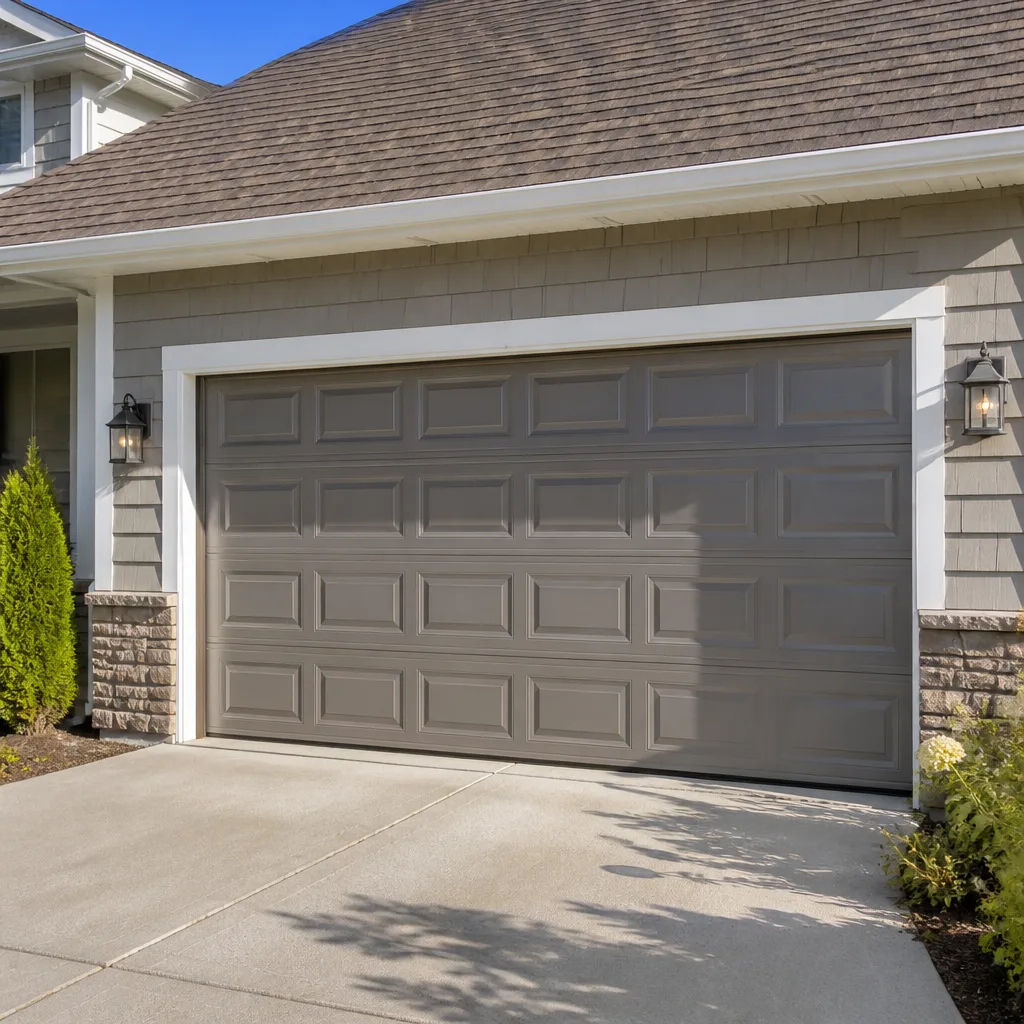 Raised-panel steel
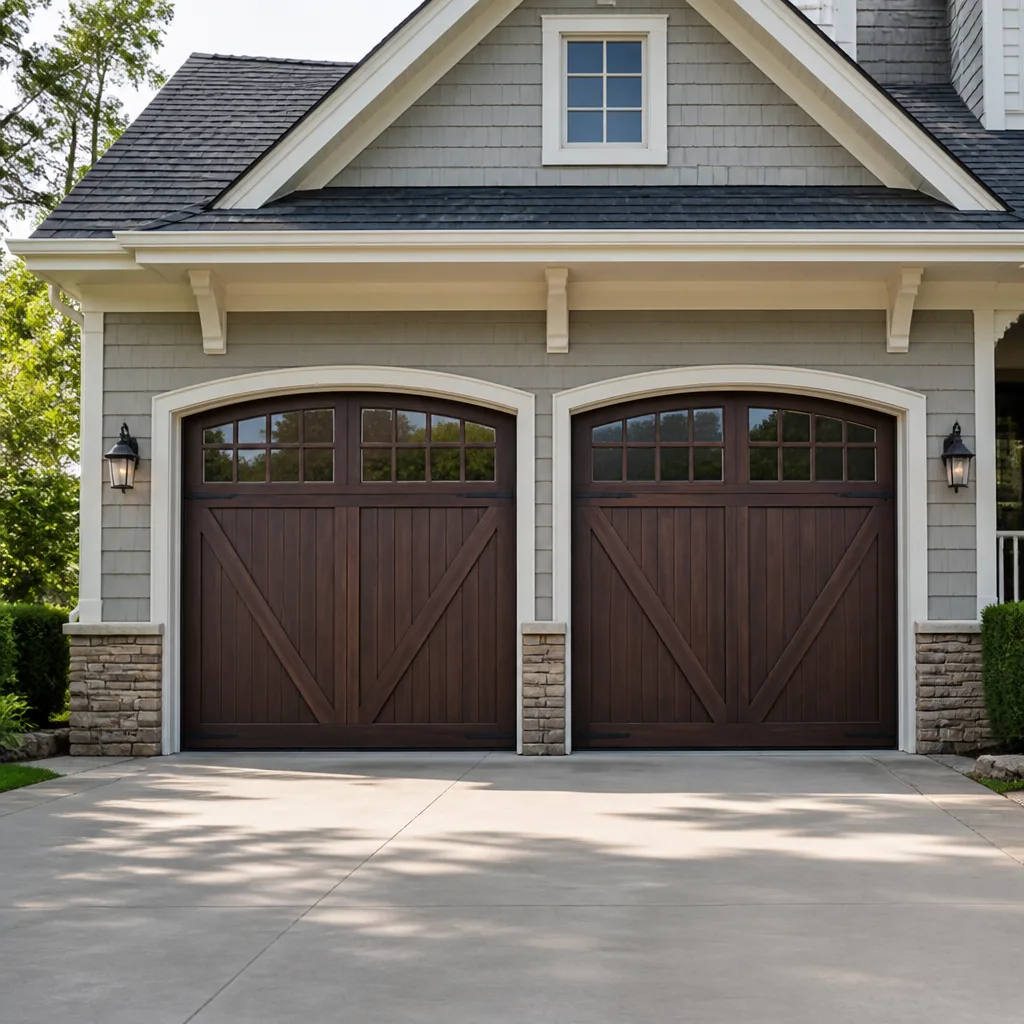 Carriage house
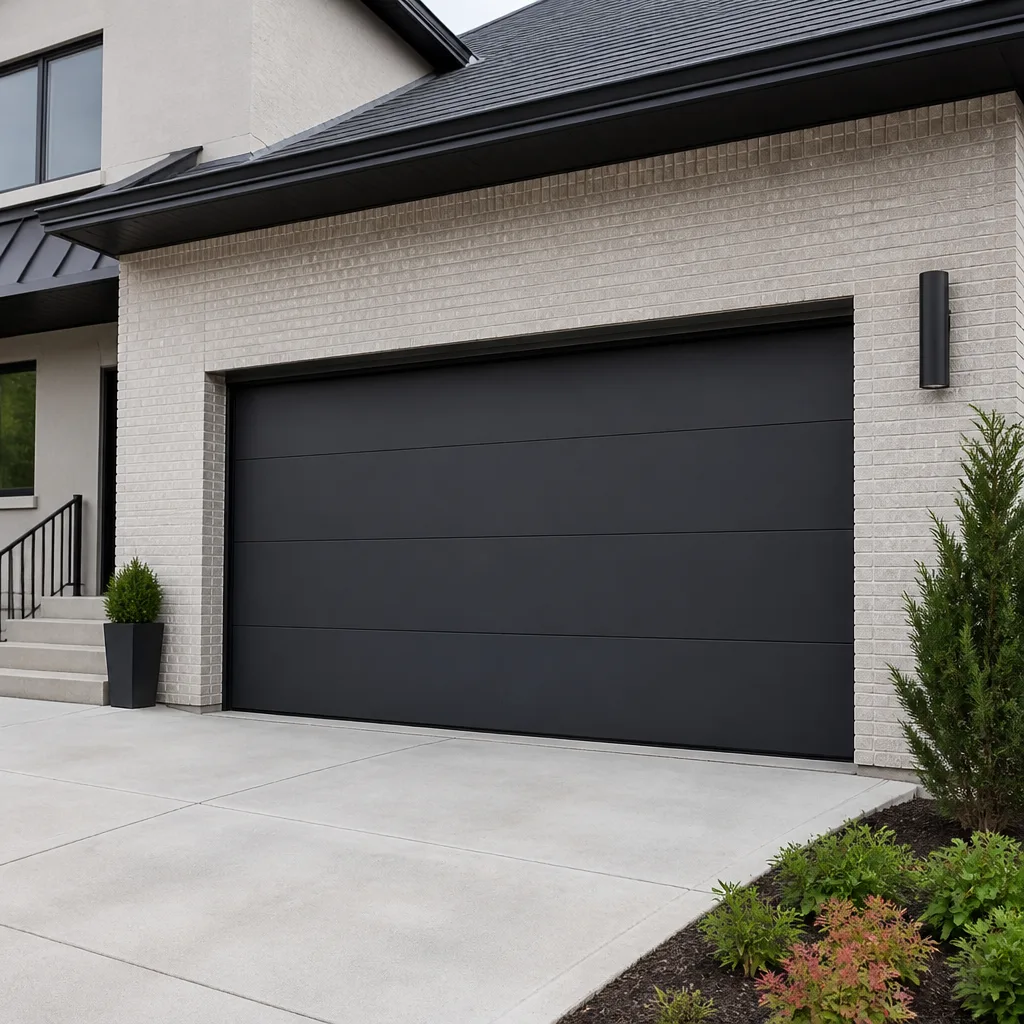 Modern flush
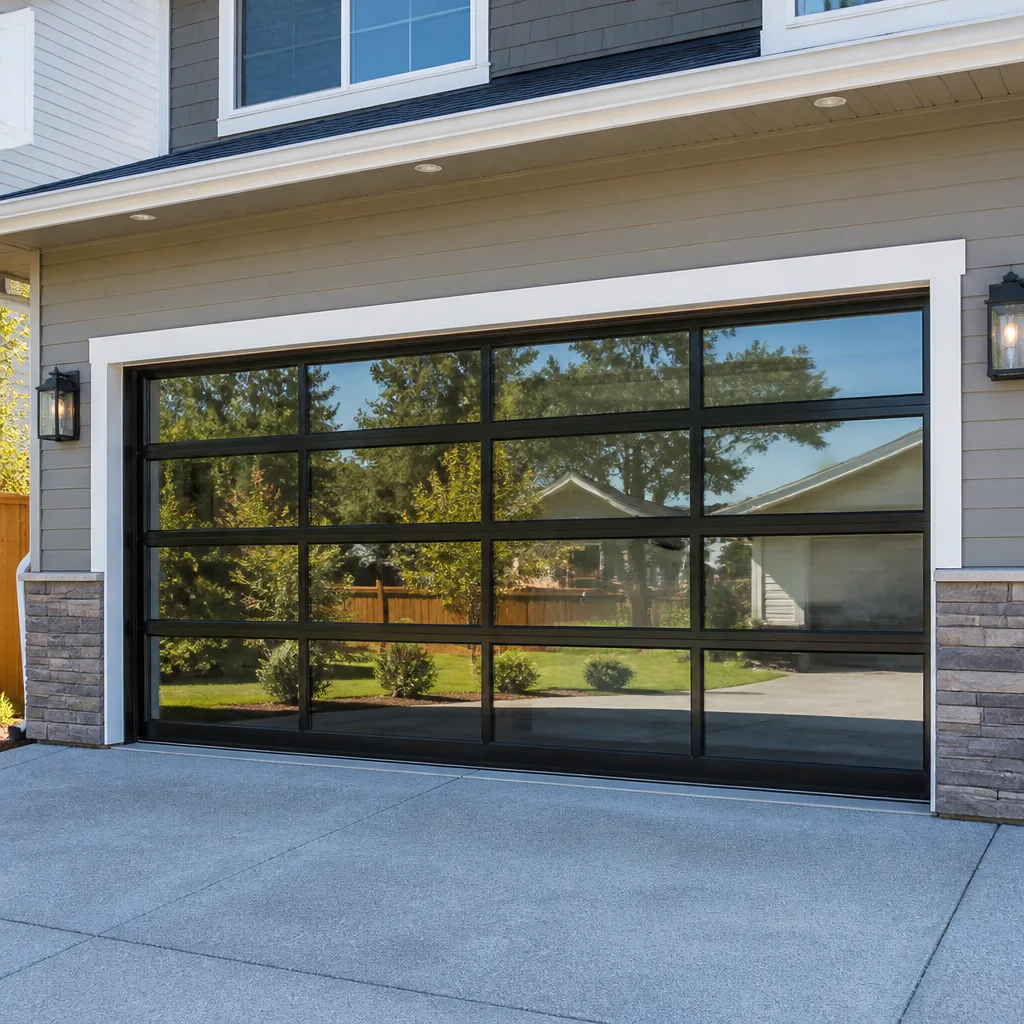 Full-view glass
 LiftMaster openers
 Chamberlain openers
Full 25-point door and opener safety check with every visit - springs, cables, rollers, tracks, and your LiftMaster or Chamberlain opener included
You get a price before we start. It does not change when the truck arrives.
Get your free estimateGarage Door Warning Signs: A Miami Homeowner’s Reference Guide
A garage door that reverses before it hits the ground isn’t broken. It’s working exactly as designed. A door that shudders on the way down but still closes fully is a much more serious warning. These two problems look nearly identical to a homeowner, but one is a sensor doing its job and the other is a spring losing tension. Confusing the two is how Miami homeowners either ignore a real hazard or panic over a ten-cent sensor adjustment. This guide gives you a clear triage system for every major garage door symptom, so you know what to do the moment something sounds or feels wrong. And unlike national guides, this one accounts for what Miami’s humidity, salt air, and afternoon heat do to a garage door over time.
Quick Answer
Most garage door warning signs in Miami fall into three buckets: stop using the door now (shuddering, visible spring gaps, frayed cables, a door that drops when released), schedule service within a week (grinding, slow operation, cracked seals, rust streaking), or monitor it (occasional squeaks, minor cosmetic rust, slight imbalance you can correct manually). The non-negotiable rule is this: if a torsion spring is showing visible damage or the door behaves unpredictably when opening, disconnect the opener and call a technician the same day. At Bramwell Garage Doors Miami, we’ve seen too many Miami homes where a $200 spring replacement was ignored until it became a $1,400 door-and-track catastrophe.
Styles & brands we work with
Table of Contents
- The Triage System: Stop, Schedule, or Monitor
- What Every Garage Door Sound Means in Miami
- Salt Air and Humidity: The Miami-Specific Warning Signs
- How to Test Your Auto-Reverse Safety Feature
- Symptom, Cause, Safety Level, and Cost Reference Table
- Spring Warning Signs: What to Look for Before They Break
- Cable and Track Warnings: The Silent Structural Hazards
- What Repairs Actually Cost in Miami
The Triage System: Stop, Schedule, or Monitor
Nobody has ever sat a Miami homeowner down and explained that garage door problems have different urgency levels. So most people do one of two things: they ignore everything until the door stops moving, or they call a repair company in a panic over a sound that’s been happening for six months and isn’t dangerous. Here’s the system we use when a homeowner calls Bramwell Garage Doors Miami describing a symptom. It works just as well for you reading this at your kitchen table.
Stop using the door today
These symptoms mean something under tension is failing. A torsion spring, which is the heavy coil mounted above the door that handles most of the lifting weight, carries enough force to cause serious injury if it snaps while you’re nearby. A frayed lift cable, which is the steel cable that runs along each side of the door and connects to the spring system, is also in this category. Here’s what puts a door in the stop-today column:
- The door shudders or jerks on the way down but still closes. This usually means one spring has already broken and the other is carrying the full load. It will fail too, and soon.
- You see a visible gap in the torsion spring. If the coil has separated into two pieces, the spring is broken. The door will not open without help, and that help should not be your arms.
- The door drops fast when you release it from the opener. A healthy door stays put when you pull the emergency release cord. A door that free-falls means the spring tension is gone.
- Frayed or unraveling cables. If you see individual steel strands poking out of the cable that runs alongside the door, stop using the door. A snapped cable under tension can whip violently.
- The door makes a loud bang and then won’t open. That’s the sound of a torsion spring failing. It’s startling, and it means the spring has released all its stored energy.
All of these share one thing: the components that counterbalance the door’s weight are compromised. The door weighs 150 to 250 pounds, sometimes more. Do not try to open it manually. Call a technician. At Bramwell, our torsion spring replacement in Miami typically runs $180 to $340, parts and labor, and we carry springs for all major brands including Chamberlain, Genie, and Clopay doors.
Schedule within a week
These symptoms won’t fail catastrophically, but they’re getting worse and every day of delay adds wear to other components. Think of them like a check-engine light. You don’t have to pull over, but you should get it looked at this week.
- Grinding or scraping during operation. The most common cause in Miami is corroded rollers or a dry trolley, which is the carriage that slides along the opener rail. Left alone, it damages the rail and the opener motor.
- The door is visibly slower than it used to be. This can be a failing opener capacitor or increasing friction from worn rollers. Either way, it’s a repair that gets more expensive the longer you wait.
- The bottom seal is cracked, brittle, or pulling away from the door. In Miami, a failed bottom seal lets rain-band water into the garage, which leads to mold, rust on your stored items, and eventually damage to the door’s bottom panel.
- Rust streaking from the spring shaft or cable drum. The cable drum is the spool that winds the lift cable. Reddish-brown streaks mean moisture has gotten into the metal, and in Miami’s salt air this progresses faster than in most of the country.
- The door is crooked when it closes, leaving a gap at one corner. That often means one side’s cable has stretched or a track bracket has come loose.
Monitor it
These symptoms are annoyances or early-warning indicators. You can live with them for a few months, but you should note them and check periodically to make sure they’re not progressing.
- Occasional squeaks. A squeak on a dry day is usually a roller bearing losing its lubrication. A squeak every single cycle is a schedule-within-a-week issue.
- Light surface rust on the door face. Cosmetic unless it eats through the panel, which takes years in Miami’s climate but happens faster on doors that face west into the afternoon sun and salt breeze.
- Small dents or dings on the lower panel. If the door still travels smoothly and the tracks aren’t affected, this is a cosmetic issue you can address whenever it bothers you enough.
What Every Garage Door Sound Means in Miami
Your garage door talks. Most Miami homeowners just don’t know how to listen. Each sound is a diagnostic clue, and the same sound can mean different things depending on when it happens in the cycle, how loud it is, and whether it’s new or has been there for years. Here’s a plain-language breakdown of the sounds we get called about most often at our Garage Door Repair in Miami service area, from Coral Gables to Kendall to Homestead.
Grinding: The trolley is dry or the chain is skipping
When you hear a grinding noise coming from the opener rail, the most common cause is the trolley. The trolley is the carriage that slides back and forth along the rail, pulled by either a chain or a belt. When the trolley channel loses its lubrication, metal rubs against metal and the sound is rough and continuous. If you have a chain-drive opener, a grinding sound can also mean the chain has stretched and is skipping over the sprocket. Both conditions are repairable, but grinding is in the schedule-within-a-week column because a dry trolley every day means premature wear on the rail and the motor. Most lubrication and chain tension adjustments in Miami run $95 to $165.
Squeaking: Rollers or hinges need attention
Squeaks are almost always about the rollers, which are the small wheels that ride inside the vertical and horizontal tracks, or the hinges that connect the door panels. When a roller bearing loses its grease or a hinge pin gets dry, you get a high-pitched sound that follows the door’s movement. Miami’s humidity actually helps with this one in the short term because moisture in the air keeps some lubrication effective. But over years, the same humidity accelerates corrosion inside the roller bearings. A squeak that happens every time the door moves is a lubrication job now and potentially a roller replacement later. Roller replacement for a standard two-car garage door in Miami typically runs $85 to $180.
A loud bang: A torsion spring just broke
This is the sound Miami homeowners describe to us more than any other, usually with the same phrasing: “It sounded like a gunshot in the garage.” That’s exactly what it was. A torsion spring stores thousands of pounds of torque, and when the coil finally fractures, all that stored energy releases in a fraction of a second. If the door was closed when the spring broke, it usually stays closed. If it was open, the door often comes down hard. Either way, the door is not safe to use, and you should not try to open it manually. Call us or another garage door company that can do a same-day spring replacement. For more detail on spring failures specifically, read our Garage Door Spring Repair in Miami page before you call, so you know exactly what questions to ask.
Rattling: Loose hardware or panel separation
A rattle is different from a grinding sound. Rattling is intermittent, shorter, and sounds like something is physically loose. And something usually is. The most common sources are loose track brackets, loose hinge bolts, or a panel that has separated slightly from its neighbor. Miami’s daily thermal expansion and contraction, especially on west-facing doors, works bolts loose over time. A quick visual inspection while the door is closed will often reveal the culprit. Tightening hardware is straightforward and inexpensive, but if a panel is separating, that’s a structural repair that usually means replacing the affected panel or the door. Panel replacement in Miami runs $250 to $600 depending on the panel width, material, and brand.
Salt Air and Humidity: The Miami-Specific Warning Signs
National garage door guides are written for places like Ohio and Texas. They tell you about lubrication and spring cycles. What they don’t tell you is what happens to a garage door that lives three miles from Biscayne Bay, where the air itself is slowly corroding every metal component. Here are the warning signs that matter specifically in Miami, and what they mean.
Rust streaking from the spring shaft or cable drum
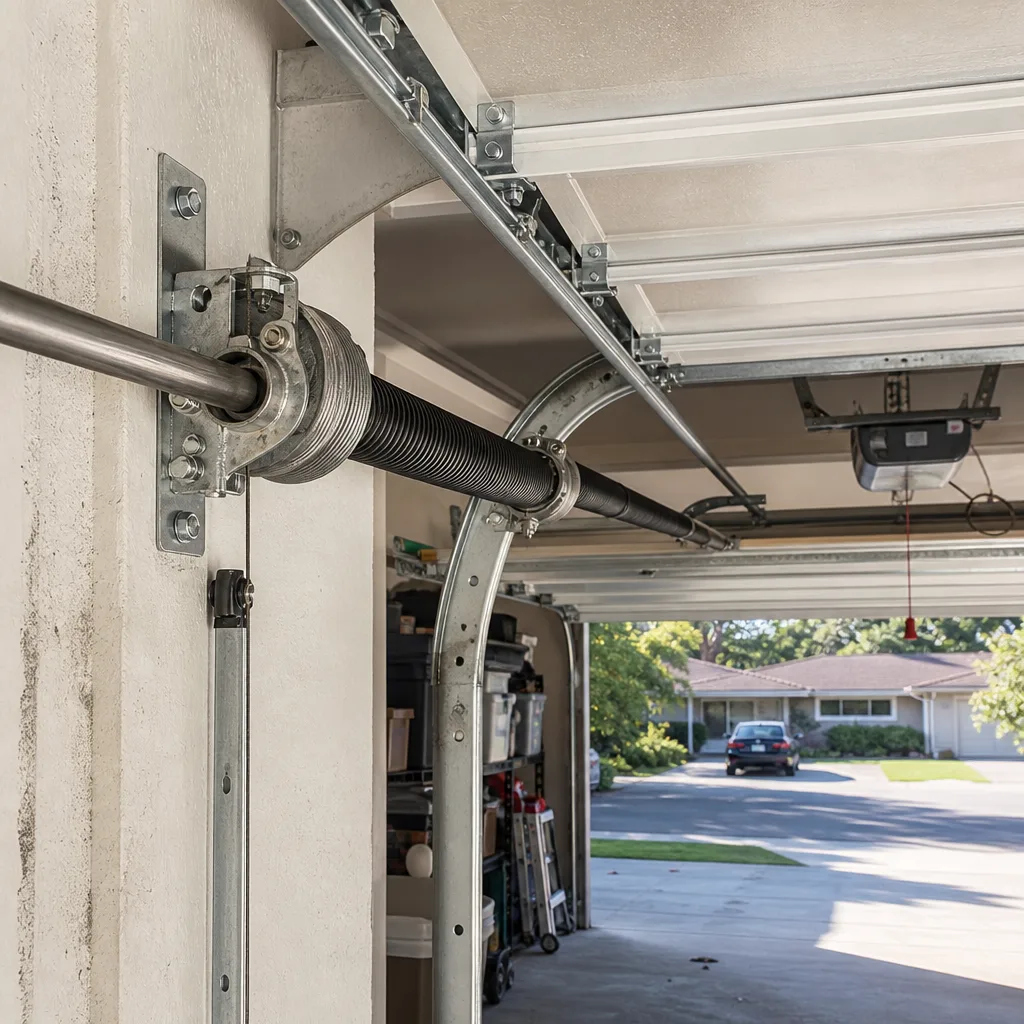
This is the big one. Look at the torsion shaft, which is the horizontal metal bar that runs above the door and holds the torsion springs. Look at the cable drums at each end of that shaft. If you see reddish-brown streaks that look like they’re bleeding downward onto the wall or the door, that’s not just ugly. That’s moisture intrusion into the metal, and in Miami’s salt-air environment it accelerates faster than anywhere in the country except coastal Louisiana. A rust-stained shaft doesn’t necessarily fail tomorrow, but it’s in the schedule-within-a-week column because a seized cable drum can snap a cable, and now you have a stop-using-the-door emergency. Surface rust treatment and cable drum replacement for a Miami garage door typically runs $110 to $240.
Bottom seal deterioration from rain-band exposure
The bottom seal, sometimes called the astragal, is the rubber strip that runs the full width of the door along the floor. In Miami, this seal does heavier work than it does anywhere else in the country. It has to keep out storm water that gets driven horizontally by rain bands. It has to survive daily UV exposure if the door faces east or west. It has to handle repeated soak-and-dry cycles that crack the rubber from the inside. When the seal fails, the first sign is usually water pooling in the front of the garage after a storm. The second sign is visible cracking or a seal that has pulled away from the door’s bottom retainer. A failed seal is a schedule-within-a-week repair, not because the seal itself is dangerous but because everything that water touches eventually becomes a maintenance problem. Bottom seal replacement in Miami runs $80 to $150 for most doors.
Panel warping from afternoon sun
Miami gets brutal afternoon sun, and a garage door that faces west or southwest absorbs that heat for hours every day. Steel doors with foam insulation handle this better than uninsulated doors, but even good steel doors can warp if the panel was manufactured with tension in the metal. The warning sign is a visible bow in a panel, usually the top one or the one that sits at eye level when the door is closed. You’ll see it as a subtle curve or a spot where the panel no longer sits flush against the tracks. A warped panel won’t collapse, but it eventually stresses the hinges and can throw the door off balance. Panel replacement is the fix, and it’s worth pricing a full door replacement at the same time if multiple panels are affected. For new door options, our Garage Door Installation in Miami page covers brands like Amarr and Clopay with pricing context for Miami homes.
How to Test Your Auto-Reverse Safety Feature
Every garage door opener sold in the United States since 1993 has two safety systems: photo-eye sensors and an auto-reverse mechanism. The photo-eye sensors are the two small units mounted near the floor on each side of the door opening. The auto-reverse mechanism is what makes the door reverse if it hits something while closing. Both can fail silently, and every door manufacturer recommends testing them monthly. Almost nobody does. Here’s how to test both in under five minutes, and what a failure means.
The auto-reverse test
- Place a roll of paper towels flat on the floor directly under the center of the door’s path.
- Close the door using the wall button or remote.
- Watch what happens when the door contacts the paper towel roll. A properly functioning door should reverse within two seconds of contact and return to the open position.
- If the door crushes the roll or doesn’t reverse until it’s already compressed the roll significantly, the auto-reverse mechanism needs adjustment or repair.
- Test your auto-reverse every month. It takes sixty seconds and it’s the single most important safety check you can do.
The auto-reverse’s force sensitivity is adjusted by two small dials on the opener motor unit, usually labeled “up force” and “down force.” These dials control how much resistance the door must meet before the opener reverses. If a previous owner or a handyman turned the down-force dial up to get a sticky door to close, the auto-reverse may no longer sense enough resistance to reverse when it should. This is exactly the kind of thing a homeowner can’t safely diagnose by trial and error. If your auto-reverse test fails, call a technician and describe exactly what happened.
The photo-eye test
- Start with the door open.
- Press the wall button to close the door.
- While the door is descending, wave your foot or hand in front of one of the photo-eye sensors near the floor. The door should reverse.
- Check that both sensors have a small LED light glowing. If one light is blinking or dark, the sensors have lost alignment or power.
- You can try gently nudging a misaligned sensor back into position, but if the LED stays dark, the sensor or its wiring needs replacement.
A failed photo-eye test or auto-reverse test puts your door in the stop-using-it column, even though the door may still open and close normally. These safety systems exist to prevent crushing injuries, and in a city with as many children and pets as Miami, they’re not optional. Sensor replacement for a Miami garage door typically runs $90 to $160, and most technicians carry replacement sensors on the truck. At Bramwell, every Garage Door Repair in Miami visit includes a safety-system check as part of the written estimate, so you’ll know if your door’s safety features are working before any money changes hands.
Symptom, Cause, Safety Level, and Cost Reference Table
This table is designed to be the reference you bookmark. When something changes with your garage door, find the symptom, check the safety level, and know exactly what to expect before you call anyone. The cost ranges reflect what we commonly see across Miami for residential garage doors, from Westchester to Pinecrest to Aventura, as of early 2025. Your exact price will depend on your door’s brand, size, and what else the technician finds during the inspection.
- Door shudders on the way down but closes | Likely cause: broken torsion spring | Safety level: stop using the door | DIY-safe: no | Typical Miami cost: $180 to $340
- Loud bang, door won’t open | Likely cause: torsion spring failure | Safety level: stop using the door | DIY-safe: no | Typical Miami cost: $180 to $340
- Frayed or unraveling lift cable | Likely cause: cable wear or corrosion | Safety level: stop using the door | DIY-safe: no | Typical Miami cost: $150 to $260
- Door free-falls when released | Likely cause: broken spring or cable | Safety level: stop using the door | DIY-safe: no | Typical Miami cost: $180 to $340
- Grinding during operation | Likely cause: dry trolley, worn rollers, chain skip | Safety level: schedule within a week | DIY-safe: lubrication only | Typical Miami cost: $95 to $165
- Severe rust streaking on shaft or drums | Likely cause: salt-air corrosion | Safety level: schedule within a week | DIY-safe: no | Typical Miami cost: $110 to $240
- Cracked or missing bottom seal | Likely cause: UV and heat exposure | Safety level: schedule within a week | DIY-safe: yes for simple replacement | Typical Miami cost: $80 to $150
- Door is slow to open or close | Likely cause: failing opener, worn rollers | Safety level: schedule within a week | DIY-safe: no | Typical Miami cost: $150 to $600
- Occasional squeaking | Likely cause: dry rollers or hinges | Safety level: monitor | DIY-safe: yes | Typical Miami cost: $0 to $100
- Light cosmetic surface rust | Likely cause: salt air | Safety level: monitor | DIY-safe: yes for treatment | Typical Miami cost: $0 to $50
Spring Warning Signs: What to Look for Before They Break
Torsion springs are the most dangerous component on your garage door, and they almost always give warning before they fail. Most Miami homeowners just don’t know what to look for, because the warning signs are subtle and the springs sit above the door where nobody looks. Here’s what to check, and exactly what it means.
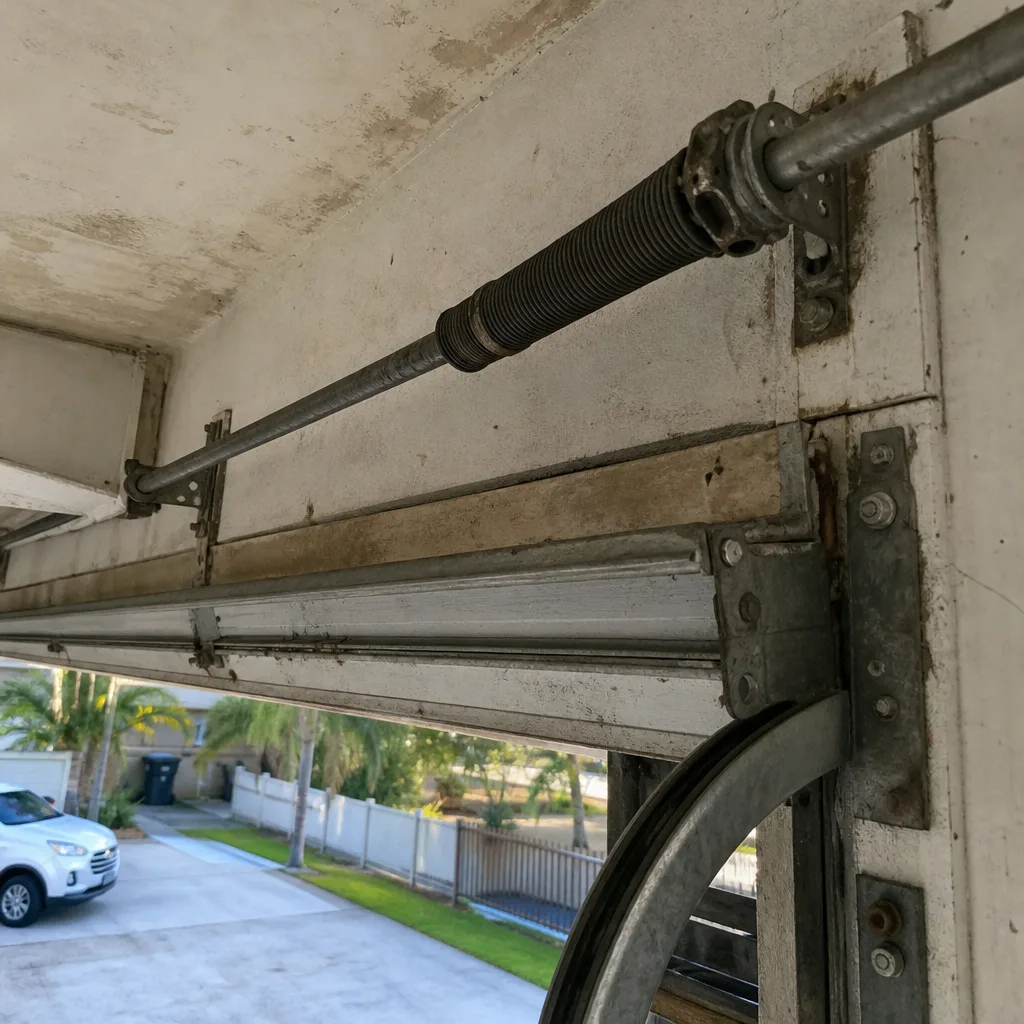
First, the basics. A torsion spring is a heavy steel coil mounted on the torsion shaft above the door. It handles the door’s weight so the opener only has to guide the door, not lift it. Standard residential torsion springs in Miami are rated for 10,000 cycles, which translates to roughly 7 to 10 years of normal use. When a spring is approaching the end of its life, you may notice these signs:
- A visible gap in the coil. If you look along the spring and see a separation where the coil has split into two pieces, the spring has already broken. This is the stop-using-the-door condition we described earlier.
- A door that feels heavier than it used to. Pull the emergency release cord and try lifting the door manually. A properly balanced door lifts with moderate effort and stays at the halfway point when you let go. A door that feels much heavier than last year means the spring is losing tension.
- The door rises unevenly. If one side of the door starts moving before the other, the spring tension or a cable is compromised.
- Rust along the coil’s surface. Springs are powder-coated, but that coating eventually fails in Miami’s salt air. Surface rust is cosmetic at first but accelerates fatigue cracking over time.
Here’s the thing about torsion springs: testing them or attempting a repair is not a DIY job. The spring stores enough energy to cause severe injury if it releases while you’re working on it. Even experienced tradespeople treat spring work with absolute respect. When you call a garage door company for spring work, ask directly: “Do you carry the springs on the truck?” At Bramwell, we do carry torsion springs for all common residential door weights on every truck, which means one visit instead of two. We also quote the price before any work starts, so the number you hear on the phone is the number on the invoice. That’s the Bramwell Garage Doors Miami standard, and it’s how Marcus Ellery runs this location, the same way he’s run it since we opened in 2001.
Cable and Track Warnings: The Silent Structural Hazards
Springs get all the attention because they make the loudest noise when they fail. But cables and tracks fail more quietly, and their failures are just as serious. The lift cables are the two steel cables that run along each side of the door, from the bottom bracket up to the cable drum. They’re under constant tension, and in Miami they’re under constant assault from salt air and humidity. The tracks are the metal channels that guide the rollers from vertical to horizontal as the door opens. Both components give warning signs that most homeowners miss.
Cable warning signs
- Fraying or individual wire strands visible. Run your eyes along the entire length of each cable. If you see loose strands or fuzzy spots, the cable is compromised and should be replaced. This is a stop-using-the-door condition.
- Rust at the cable drum or bottom bracket. The drum end and the bracket end are where cables most often fail, because those are the points of highest stress and the points where moisture collects. If you see rust at either connection, have the cable inspected before it fails.
- Slack in one cable while the door is closed. If one cable is taut and the other has visible slack, the door is unbalanced and the slack cable is not carrying its share of the load. The taut cable is now doing double duty and is closer to failure.
Track warning signs
- Worn or flat spots on the track where the rollers ride. If the track surface looks polished in one spot or has a groove, the rollers are not rolling cleanly. This adds friction and stress to every other component.
- Loose bolts where the track mounts to the wall or ceiling. Give each track a firm shake. Movement means the bolts have backed out, which allows the tracks to shift out of alignment. Miami’s daily heat cycles work these bolts loose over time.
- Gaps between track sections. Where two sections of track join, the connection should be smooth and continuous. A visible gap or a sharp edge at the joint means the track has shifted and the door may bind or derail at that point.
Cable and track work belongs in the stop-using-the-door or schedule-within-a-week column, depending on severity. Cable replacement in Miami typically runs $150 to $260 per pair. Track repair or replacement runs $150 to $350 depending on how much track is affected and whether the brackets need replacement. At Bramwell, every repair includes the Kingswell Guarantee, which is a written promise: a written price before any work starts, a real arrival window, a clean job site, and a written guarantee on the repair. If a covered repair fails within a year, we come back and fix it at no charge. That commitment is in writing, not just spoken at the door.
What Repairs Actually Cost in Miami
Every homeowner we talk to asks the same question: what does this actually cost? And most national guides are vague, because pricing varies by market. Here’s what we can tell you based on years of doing garage door work across Miami, from Cutler Bay to North Miami Beach to Doral. These are honest ranges, not teaser prices. The number you hear from any reputable company should fall within or near these brackets.
Torsion spring replacement: $180 to $340, parts and labor included. This is the most common repair we do in Miami, and it’s the one with the most pressure behind it. A broken spring means your car is either stuck in the garage or stuck outside, so speed matters. At Bramwell, we carry springs for all common door weights on every truck, which means one visit in most cases. The price includes both springs when the door has two, and it always includes a written guarantee. Ask any technician exactly what the guarantee covers and for how long before you agree to the work. Our answer: 365 days, no charge, in writing.
Opener repair or replacement: $150 to $600. A simple gear replacement or limit-switch adjustment is at the low end. A full opener replacement with a new Chamberlain or Genie unit is at the high end. The Kingswell standard on openers is simple: we tell you if the unit is worth repairing or if replacement is the smarter money. We’ll never push a new opener when a $150 gear kit fixes the problem.
Cable replacement: $150 to $260 per pair. Cables are replaced in pairs for a reason: if one has failed, the other is the same age and has been through the same conditions. Replacing one cable and not the other just means the older cable fails next month and you pay for another service call.
Roller replacement: $85 to $180 for a full set. Most Miami homes benefit from replacing all the rollers at once, not just the one making noise. The rollers are the same age, and staggered replacement means staggered failures.
Track repair or adjustment: $150 to $350. Minor realignment is at the low end. Full track replacement on one side is at the high end.
Panel replacement: $250 to $600 per panel. The range covers standard raised-panel steel doors and the Amarr and Clopay product lines we commonly service in Miami.
Whatever the repair, the price should be quoted and agreed in writing before any work starts. If a company won’t give you a written price, or the technician says the price changed once they saw the door, that’s a red flag. You should be able to hear a price over the phone, then see that same price on paper before the technician picks up a tool. At Bramwell, that’s not a courtesy. It’s the Garage Door Repair in Miami standard we’ve operated under since 2001, and it’s what the Kingswell Guarantee exists to protect.
Common Mistakes to Avoid
- Lubricating the wrong parts. Many Miami homeowners spray WD-40 on everything that moves, including the rollers and tracks. WD-40 is a solvent, not a lubricant. Use a silicone-based garage door lubricant on hinges, rollers, and the torsion spring. Never lubricate the track itself: a lubricated track collects sand and salt grit, which grinds the rollers down faster.
- Ignoring a shudder until the door stops working. The shudder is a spring problem today and a snapped-spring emergency in a few weeks. The repair cost doesn’t go down by waiting. It goes up, because a snapped spring often damages the panels or the opener.
- Testing the door’s balance by disconnecting the opener and letting the door free-fall. This is how people get hurt. If you want to test balance, ease the door down slowly from the half-open position with both hands and feel for resistance. Never let a disconnected door drop.
- Assuming a loud garage door is normal because it’s been that way for years. It wasn’t loud when it was installed. The noise is a message. Ignoring the message for years just means the eventual repair touches more components.
- Replacing the opener when the door is the problem. When a door is hard to open, many Miami homeowners assume the opener is failing and replace it, only to find the new opener struggles just as much. The usual truth is a spring that’s lost tension or a door that’s out of balance. Diagnose before you spend.
- Skipping the monthly safety test because it seems unnecessary. Every opener manufacturer recommends a monthly auto-reverse test. Almost nobody does it. If you have children or grandchildren, this test is not optional. Sixty seconds a month is the cheapest safety insurance you’ll ever buy.
- Painting over rust without treating the metal underneath. A coat of paint over rust-streaked hardware looks better for a season and then the rust blossoms through the paint. Treat the rust first, prime, then paint. Or replace the part if the rust has gone beyond surface level.
See the difference
 Before
 After
After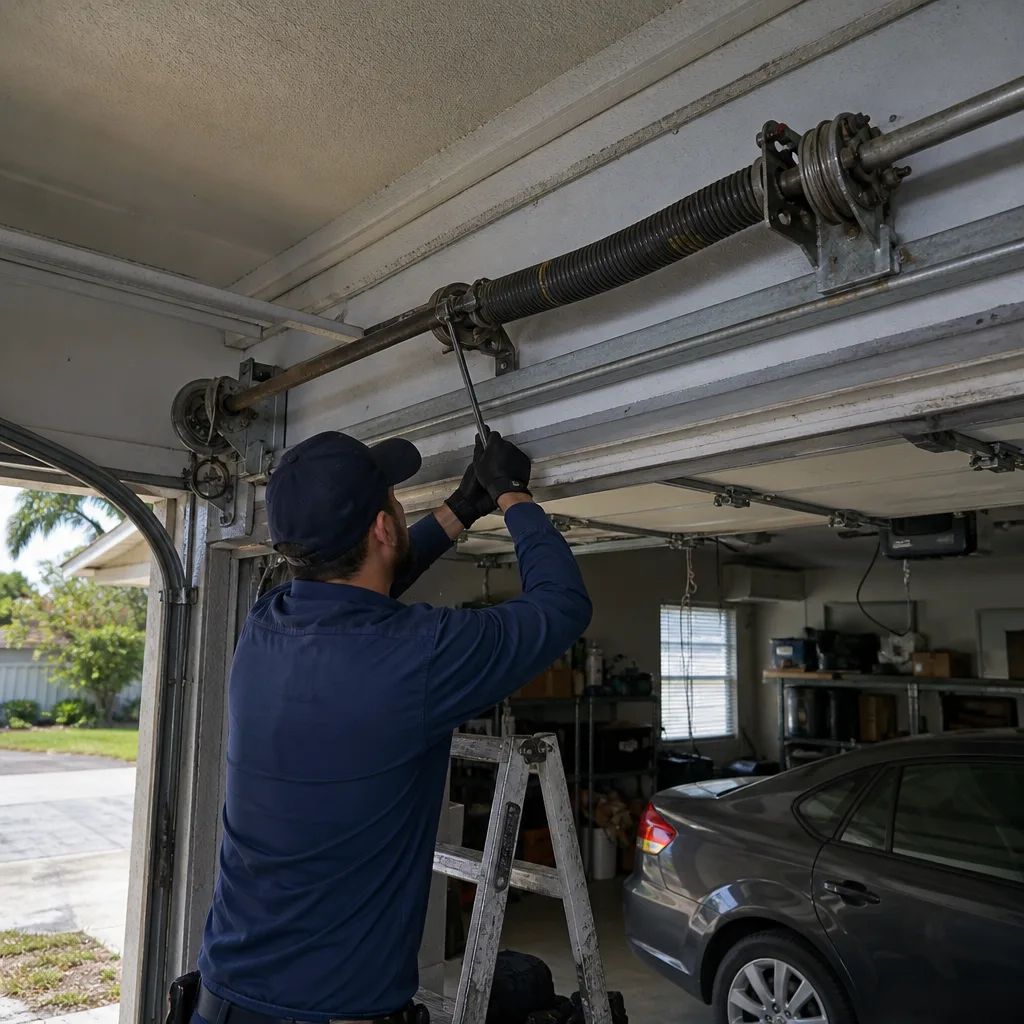 Before
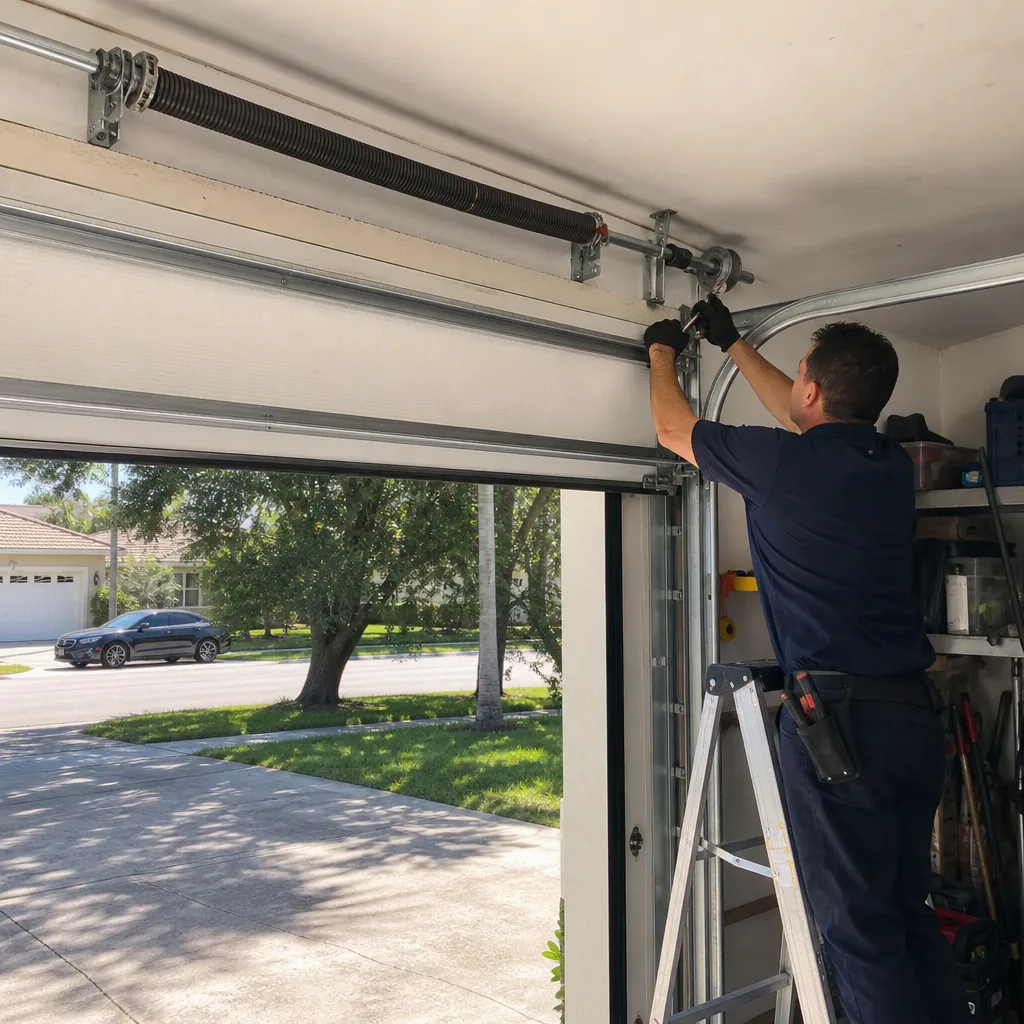 After
After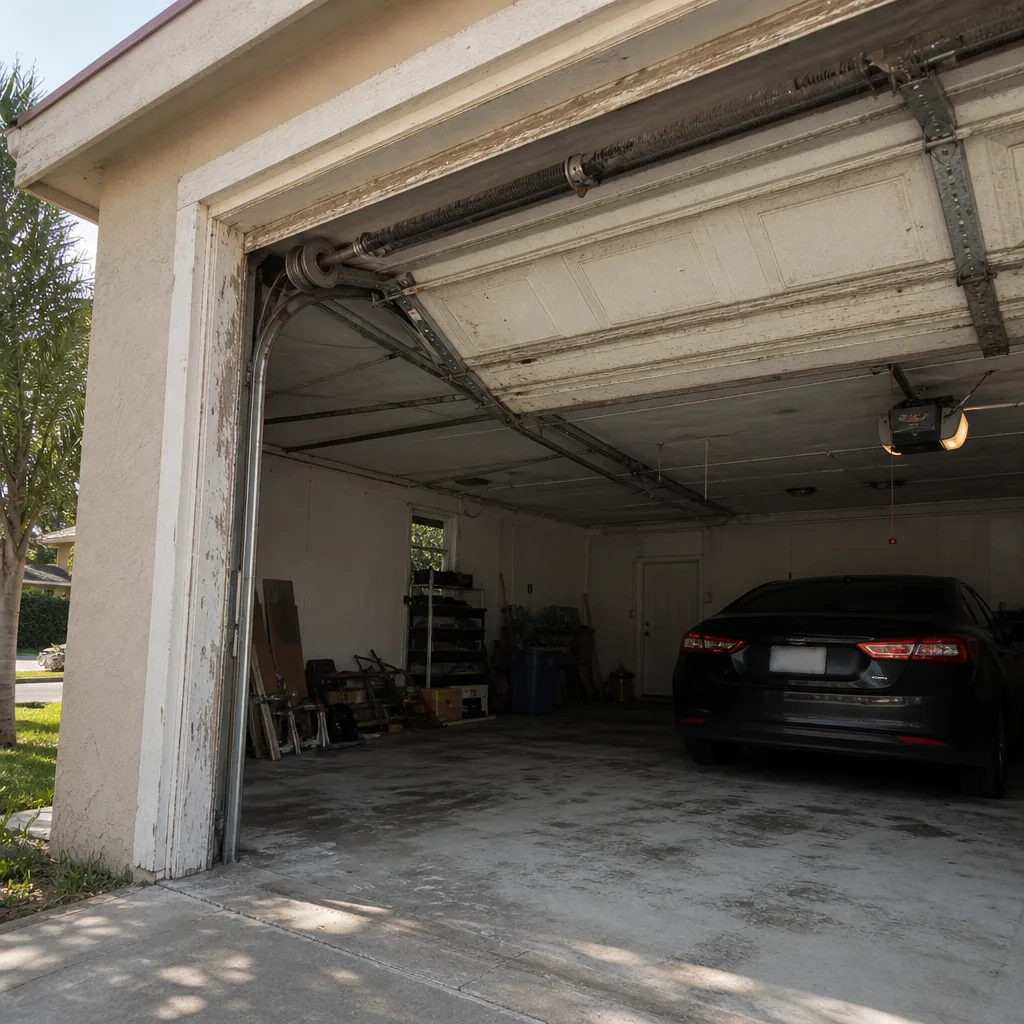 Before
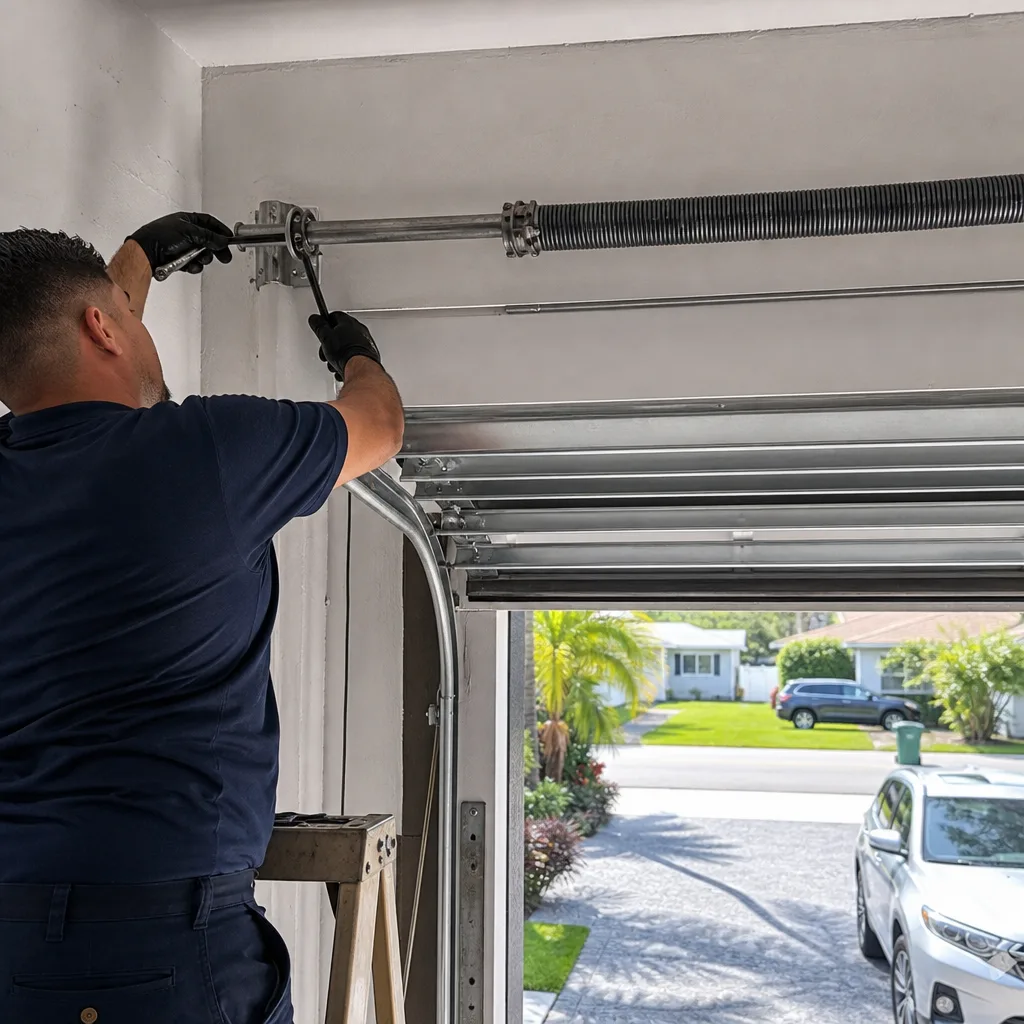 After
AfterWhen to Call a Professional
Call a garage door professional the same day for any stop-using-the-door symptom: a broken spring, frayed cable, door that free-falls, or a failed auto-reverse test. These are not conditions you can safely work around. Call within the week for grinding, slowing, rust streaking, or seal failure. These are gateways to more expensive problems and they’re all cheaper to fix this week than next month. And call whenever you’re not sure. A good garage door company will listen to what you’re describing and tell you over the phone whether it’s urgent. If they won’t do that, call a different company. Bramwell Garage Doors Miami offers free estimates in Miami, and we’ll tell you honestly over the phone whether a technician needs to come out today or a visit next week makes more sense. Call (850) 673-0645 and a live person answers 24 hours a day, 7 days a week. No voicemail tree, no answering service that can’t help you.
Frequently Asked Questions
A broken torsion spring shows one of three signs: a visible gap in the coil above the door, a loud bang when the door was last operated, or a door that won’t open even though the opener motor runs. None of these conditions are safe to work around. Call a technician the same day. Torsion spring replacement in Miami typically runs $180 to $340, and a written quote should be provided before any work starts.
Yes, and you should do it once or twice a year. Use a silicone-based garage door lubricant on the hinges, rollers, and torsion spring. Do not use WD-40, which is a solvent that removes the existing lubrication, and do not spray anything into the tracks, which should stay clean and dry. Lubrication is a monitor-it task, and it’s one of the few garage door maintenance jobs that’s safely DIY.
In Miami’s salt-air climate, standard 10,000-cycle torsion springs last roughly 7 to 10 years with normal use. If your door faces the ocean or a canal, expect the lower end of that range unless you have high-cycle springs, which are rated for 25,000 to 50,000 cycles. Rust streaking on the spring or shaft is an early warning that corrosion is accelerating the spring’s fatigue.
A door that reverses before contacting the floor is usually reacting to a photo-eye sensor that’s misaligned or blocked. The sensors sit low on each side of the door opening, and they’re easy to bump out of alignment with a bike, a trash can, or a moving box. Check that both sensors have glowing LED lights and that nothing is in the beam’s path. If the lights are on and the beam is clear, the force-sensitivity setting on the opener may need adjustment, which is a technician job.
Yes, and it’s one of the most underrated factors in Miami garage door longevity. Salt air accelerates corrosion on every steel component: springs, cables, tracks, hinges, and the door panels themselves. Homes within a few miles of Biscayne Bay, the Miami River, or any canal see faster rust formation on their garage door hardware than homes inland. The warning sign to watch for is rust streaking on the torsion shaft or cable drums, which signals that moisture has penetrated the metal.
Most common garage door repairs in Miami run between $80 and $340 depending on the component. A bottom seal replacement is $80 to $150. A torsion spring replacement is $180 to $340. A cable replacement is $150 to $260 per pair. An opener repair is $150 to $600 depending on whether it’s a gear replacement or a full unit replacement. The price should be quoted in writing before any work starts. Call (850) 673-0645 for an exact quote on your specific door, make, and situation. Estimates are free.
The Bottom Line
Your garage door is the heaviest moving object in your home, and it runs on components that wear out, corrode, and eventually fail. In Miami, the salt air and humidity accelerate that timeline, and the afternoon sun punishes doors that face west. The key is knowing which warning signs mean stop using the door today, which mean schedule service this week, and which mean keep an eye on it. A shuddering door with a broken spring is an emergency. A squeak is not. A failed auto-reverse test is a safety hazard. A rusty shaft is a warning that you should not ignore for more than a week. Whatever the symptom, you should be able to call a garage door company and get honest guidance over the phone before anyone drives to your house. That’s the standard to hold every company to. At Bramwell Garage Doors Miami, it’s the standard we’ve held ourselves to since 2001. Written price before any work starts. A real arrival window. A clean job site. A written guarantee on every repair.