
Last updated October 16, 2026
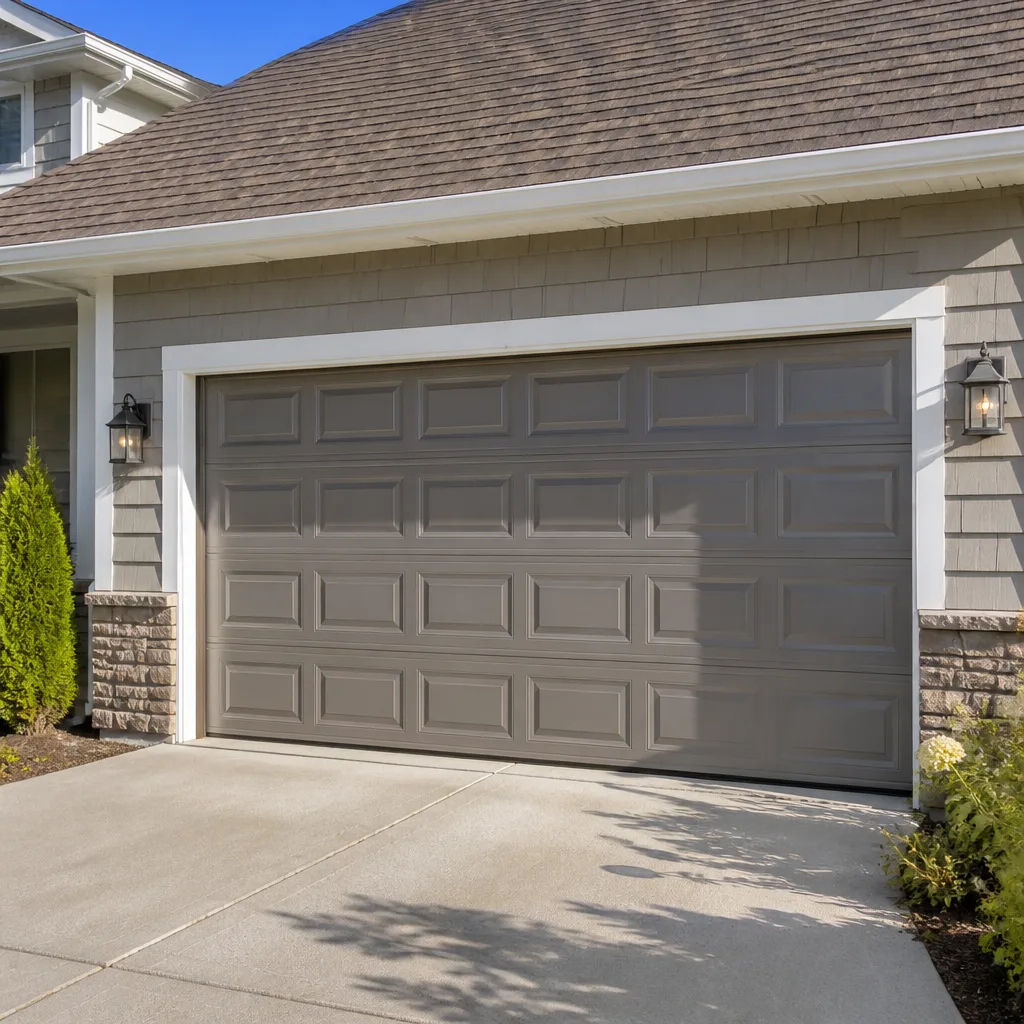 Raised-panel steel
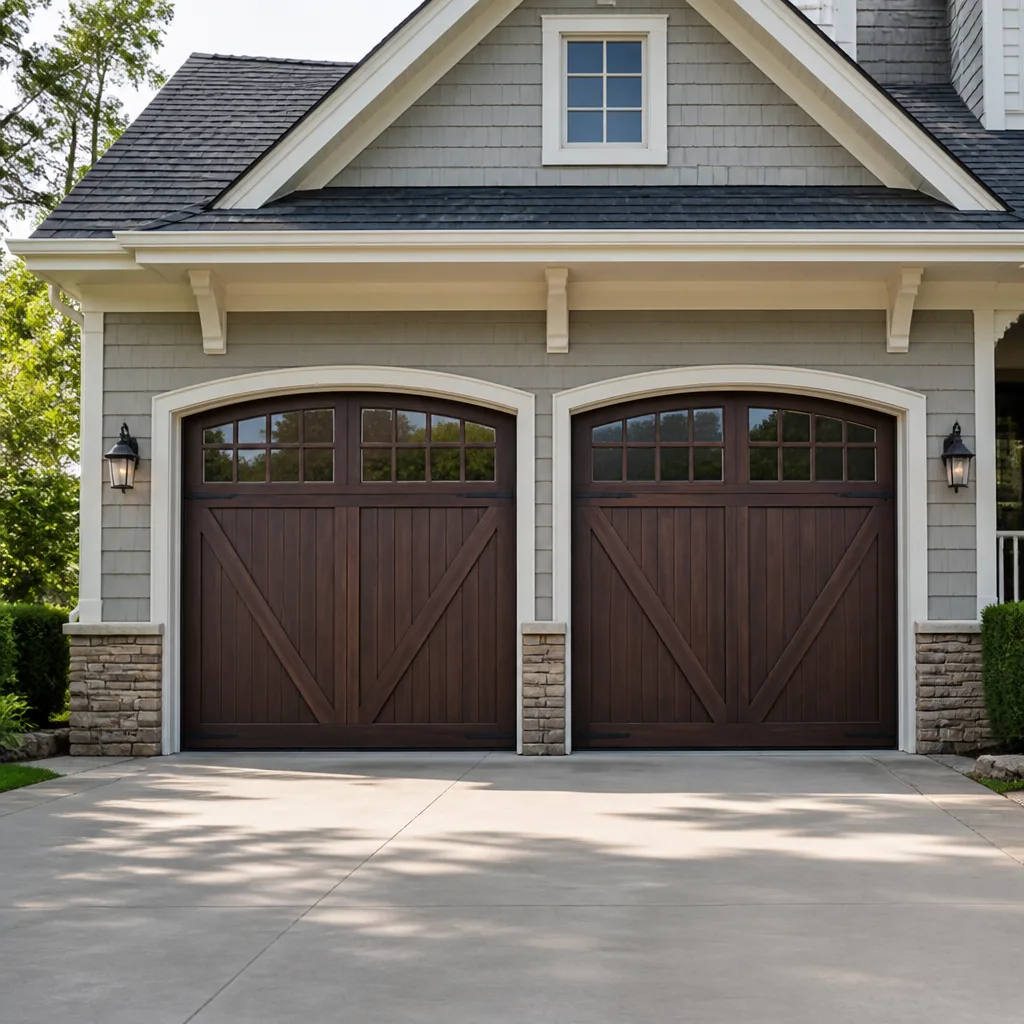 Carriage house
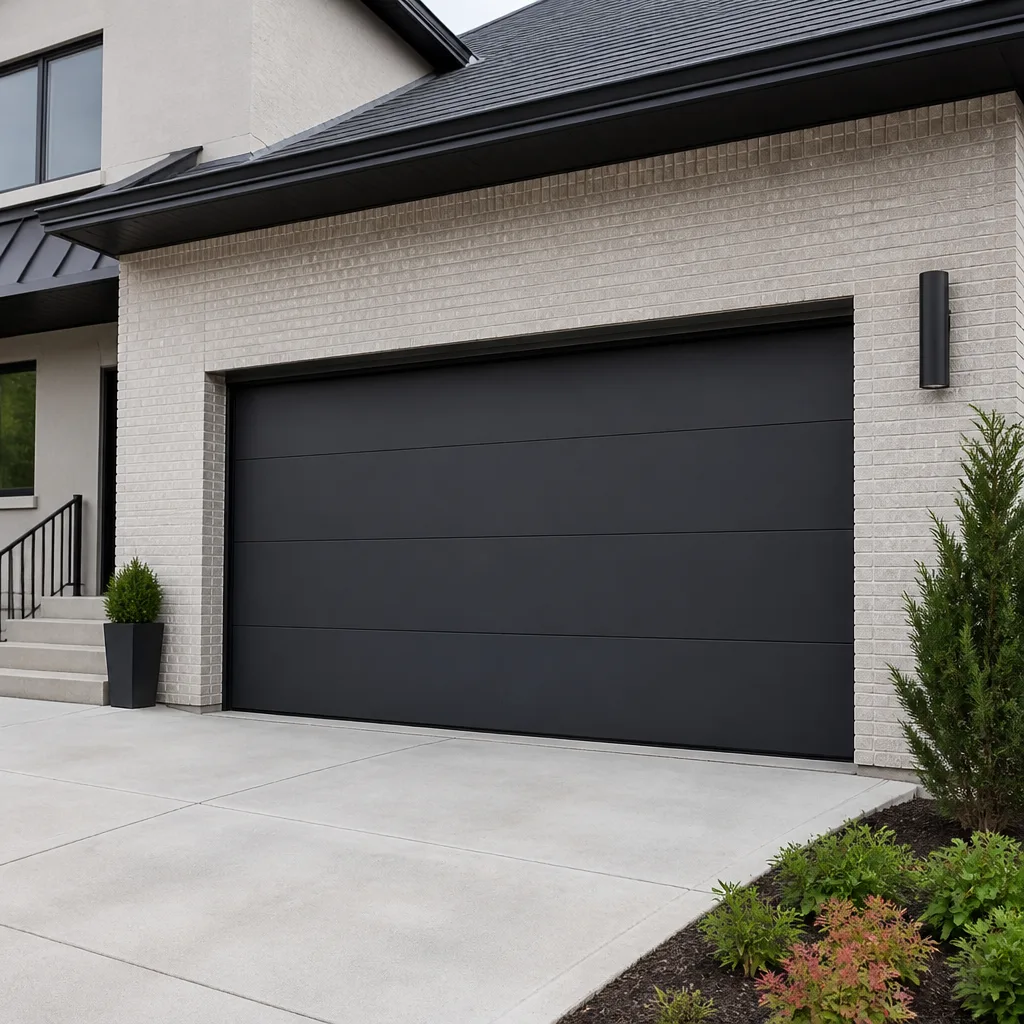 Modern flush
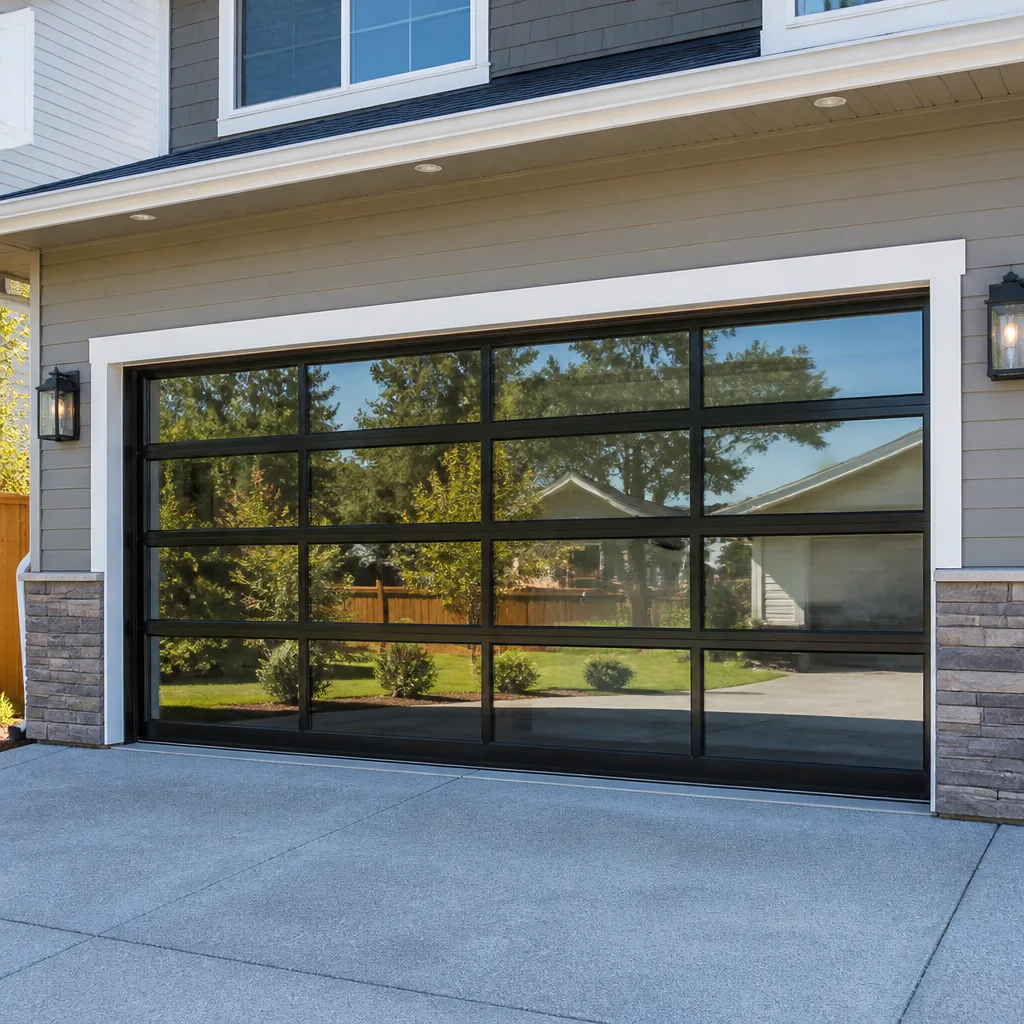 Full-view glass
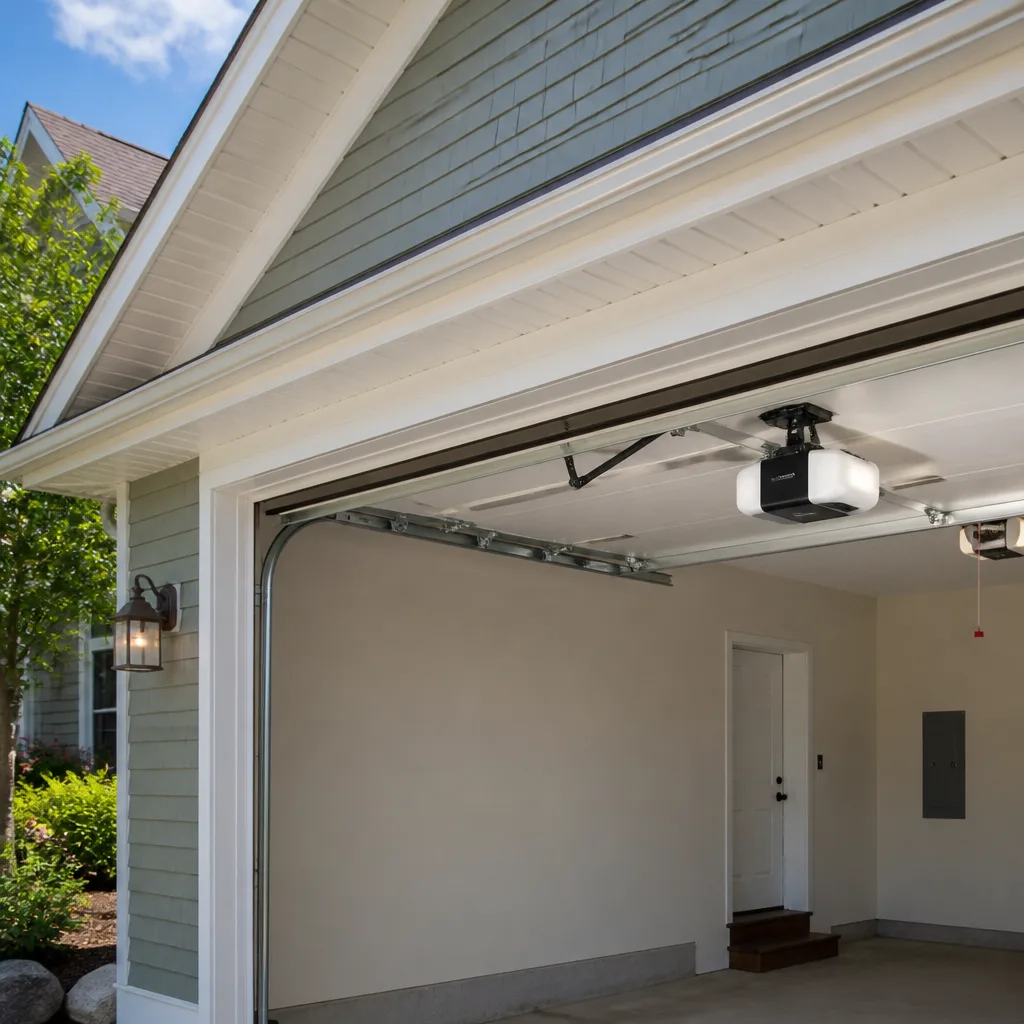 LiftMaster openers
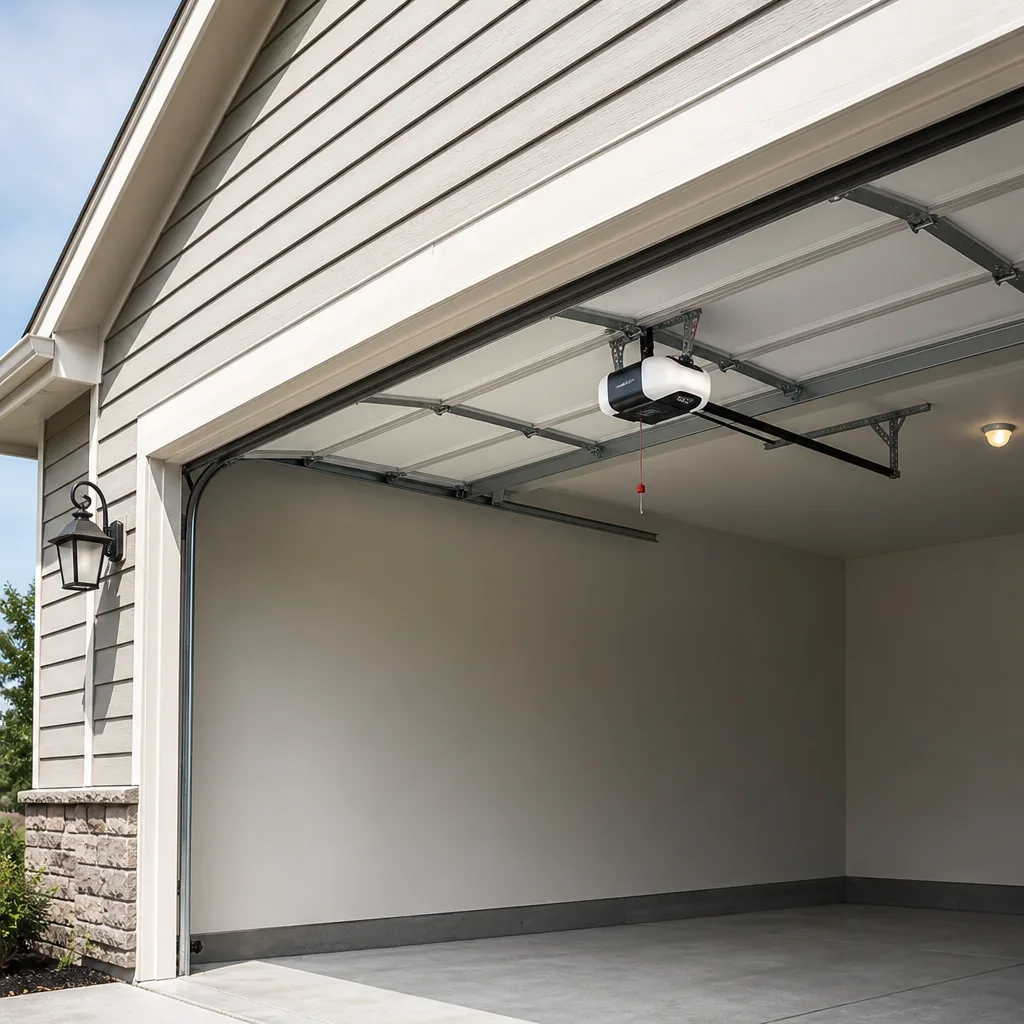 Chamberlain openers
Full 25-point door and opener safety check with every visit - springs, cables, rollers, tracks, and your LiftMaster or Chamberlain opener included
You get a price before we start. It does not change when the truck arrives.
Get your free estimateThe Complete Guide to Garage Door in Miami
Most garage door guides are written for Phoenix or Chicago. They tell you to tighten a few bolts once a year and call it maintenance. But Miami is different. Miami’s salt air can corrode an untreated torsion spring in under two years. The UV exposure can bake the color off a standard steel panel in three. And the wind-load requirements written into Miami-Dade building code mean that a door approved for Orlando can fail an inspection here without a single modification. This guide is written from the ground up for Miami homeowners. You’ll learn what actually breaks here, what it costs to fix in this market, which hardware survives the humidity, and how to check whether the door you’re about to buy is even legal to install in Miami-Dade County.
Quick Answer
A garage door in Miami needs four things to survive: a Miami-Dade Product Approval (NOA), corrosion-resistant hardware rated for coastal exposure, spring and opener components sized for daily heat-cycle stress, and a maintenance rhythm built around hurricane season, not the calendar. If you’re buying a new door, the NOA is the first thing to verify. If you’re repairing an existing one, galvanized or stainless hardware is non-negotiable. Repairs in Miami typically run $95 to $450 for common issues like broken springs, cable failures, or opener gear replacement, and the best time to schedule non-emergency work is January through April, before the summer storms arrive.
Styles & brands we work with
Table of Contents
- Miami-Dade Product Approval: Why It’s the First Thing to Check
- How to Read a Wind-Load Rating Without the Code Jargon
- Salt Air vs. Garage Door Hardware: What Survives and What Doesn’t
- The Miami Garage Door Maintenance Calendar: Seasonal Rhythm, Not Random Checks
- What Repairs Actually Cost in Miami in 2026
- Springs and Openers: The Two Parts That Fail Most in Miami
- Full Replacement: When to Repair, When to Replace, and What to Order
- Common Mistakes to Avoid
Miami-Dade Product Approval: Why It’s the First Thing to Check
Here’s the thing that surprises most Miami homeowners: a garage door that is perfectly legal in Broward County may not be approved for installation in Miami-Dade. The county maintains its own product testing and approval process, and it is stricter than any other building code jurisdiction in the continental United States. The approval itself is called an NOA, short for Notice of Acceptance. If the door you want doesn’t have an active Miami-Dade NOA, the permit won’t clear, and the inspection will fail.
What does the NOA actually test? A Miami-Dade approved garage door has been subjected to lab-simulated hurricane conditions. That means positive and negative wind pressure cycles, impact testing against windborne debris, and water infiltration resistance under driving rain. A door that passes receives an NOA number that appears on the approval documents and, in many cases, on a label affixed to the door itself. If a contractor quotes you a door and cannot produce an NOA number, treat that quote as incomplete.
In our experience in Miami, this is also where a lot of homeowner-installed or handyman-sourced doors go wrong. Someone buys a door online from a national retailer, has it installed, and only discovers the NOA problem when selling the house or pulling an unrelated permit. The title search flags the unpermitted work, and now the seller is fixing it on a deadline. When we install garage door installation in Miami, the NOA verification happens before we order a single panel. It’s the first step, not an afterthought.
Here’s a practical rule: if you live anywhere in Miami-Dade, always ask for the NOA number in writing before signing any contract for a new door. If you live in the city of Miami, Coral Gables, Kendall, or anywhere east of I-95, wind exposure is higher, and the NOA’s wind-load rating matters even more. More on that next.
How to Read a Wind-Load Rating Without the Code Jargon
Wind-load ratings sound intimidating, but the core concept is simple. Every garage door has a design pressure rating, expressed in pounds per square foot, or psf. That number tells you how much wind force the door can resist before it deflects to the point of failure. Miami-Dade divides the county into wind speed zones based on proximity to the coast and elevation. The closer you are to the water, the higher the wind speed your door must be rated to handle.
You don’t need to memorize the zones, but you do need to know two things. First, the required design pressure for your address is determined by your wind speed zone, not by your preference. Second, a door with a higher design pressure rating is not automatically better if the rest of the system doesn’t match. The door, the tracks, the mounting hardware, and the attachment to the structure all have to work as one system. A 170 mph door bolted to tracks rated for 130 mph is a weak system hiding behind a strong door.
Here’s how to check your own home’s requirement:
- Find your property’s wind speed zone using the Miami-Dade county GIS lookup tool or by asking your building department. Most single-family homes in Miami fall between 150 mph and 180 mph design wind speed.
- Match that zone to the required design pressure rating. The county publishes a chart that converts wind speed to psf for garage doors. For a typical 8×7 single-car door in a 170 mph zone, you’re usually looking at a design pressure rating between +30 and -30 psf.
- Confirm the door you’re buying meets or exceeds that rating on its NOA documentation. Don’t accept a verbal “it’s hurricane rated” from a salesperson. Look at the NOA.
- Verify that the installation plan includes the exact track and mounting package specified in the NOA. Substituting standard tracks for the approved package voids the approval.
We’ve seen Miami homeowners pay a premium for an “impact rated” door only to discover that the installer used generic mounting hardware, which means the door doesn’t meet the NOA spec as installed. If you’re planning a garage door repair in Miami that involves any structural or track component, ask whether the work will preserve your door’s wind-load approval. This is one of those cases where the cheapest quote is often the one cutting corners on exactly this.
Salt Air vs. Garage Door Hardware: What Survives and What Doesn’t
This is the section most national guides get wrong. In Phoenix, a garage door spring lasts seven to ten years. In Miami, the same spring, if it’s not galvanized, can rust through in eighteen to twenty-four months. The salt air is relentless, and it works on everything: springs, cables, hinges, rollers, tracks, and even the opener’s internal chassis if the unit is mounted in a garage that faces the ocean or sits within a few miles of it.
Here’s the hardware hierarchy for Miami, from longest-lasting to shortest:
- Stainless steel: Best for cables, hinges, and fasteners. It resists salt corrosion better than anything else commonly available. The cost premium is real, but on a door that faces the ocean, it’s the only thing that lasts.
- Galvanized steel: The standard for torsion springs and most track systems. A good galvanized spring in a non-coastal Miami neighborhood will typically last five to seven years. Within a mile of the water, expect to replace it sooner regardless.
- Powder-coated steel: Good for door panels and visible hardware. The coating protects the steel until it’s scratched. Once the coating is compromised, corrosion spreads under the paint and you get rust bleed at the panel edges.
- Standard painted steel: The default on economy doors and most hardware-store replacement parts. In Miami’s humidity, this is the fastest route to a rusted-out hinge or a snapped cable. We don’t install standard painted steel hardware on any exterior-facing door in Miami.
Door panels matter too. Steel panels with a factory-applied rust-inhibiting primer and a marine-grade topcoat hold up better than bare steel with a thin finish. Aluminum panels with an anodized or powder-coat finish are popular in Miami because they resist salt corrosion, but they dent easier than steel and typically cost more. Fiberglass is another option, but it’s less common in Miami-Dade because of impact-testing requirements. The material conversation is always tied to the NOA conversation: a fiberglass door that isn’t Miami-Dade approved is not a legal option no matter how well it handles salt.
The takeaway is simple. When you’re buying hardware or ordering parts in Miami, specify galvanized or stainless. When you’re inspecting a door, look for rust at the bottom of the panels, on the hinge brackets, and around the spring coils. Those are the early warning signs. If you catch it before it spreads, you’ve saved yourself a bigger repair. Here at Bramwell Garage Doors Miami home, we stock galvanized and stainless options for every repair we do in the county. There’s no situation where we bring standard steel hardware to a Miami job site.
The Miami Garage Door Maintenance Calendar: Seasonal Rhythm, Not Random Checks
A Miami garage door doesn’t run on a January-to-December maintenance schedule. It runs on hurricane season and winter dry season. Here’s the rhythm we recommend to every homeowner in Miami.
January through April: The Repair Window
This is Miami’s “off-season” for garage doors, which makes it the best time to schedule non-urgent work. The winter dry season means less rain, lower humidity, and cooler temperatures in the garage, which makes it easier for technicians to work and easier for adhesives, lubricants, and new components to settle in. Panel replacements, spring replacements, track adjustments, and new opener installations all go more smoothly in these months. Most importantly, this is when you want to identify and fix problems before hurricane season puts a stressed door under real load.
What to do in this window:
- Run a full cycle test: open and close the door twice, watching for jerky movement, uneven gaps, or unusual noise.
- Check the balance. Disconnect the opener using the red release handle, then manually lift the door halfway. It should stay put. If it falls, the springs are losing tension.
- Inspect every visible bolt and bracket for rust. Pay special attention to the bottom panel, where salt spray and standing water do the most damage.
- Lubricate rollers, hinges, and springs with a garage-door-specific lubricant. Don’t use WD-40. It’s a cleaner, not a lubricant, and it actively strips the grease your parts need.
- Test the auto-reverse safety feature by placing a 2×4 flat on the ground under the door and closing it. The door should reverse within a second or two of contact. If it doesn’t, that’s a safety failure, not a maintenance issue.
May through November: Hurricane Season
Before June 1, every Miami homeowner should do one thing beyond the standard maintenance: verify that the door’s wind-load approval is intact. If you’ve had any repairs or modifications in the last year, confirm that they didn’t compromise the NOA. If you installed the door yourself or had it installed by a contractor who couldn’t produce an NOA, this is the time to get it inspected. See Garage Door Permits, Codes & Inspections in FL: What You Need to Know for permit requirements. A garage door that fails during a hurricane doesn’t just let water in. It pressurizes the house, which increases the chance of roof lift-off and structural damage. The garage door is the single largest opening in most homes, and it’s frequently the first thing to fail in a major storm.
After any tropical system passes, inspect the exterior of the door for impact dents, new rust spots, or track misalignment. Salt spray from a storm gets into places that normal coastal air never reaches. A quick rinse of the lower panel and tracks with fresh water after a storm can add years to a door’s life. And if the door ever gets hit by flying debris, even a small branch, have it inspected before the next storm. A small dent can mean a compromised panel that fails the next time it’s under load.
The Year-Round Habit
Once a month, run the door and listen. A healthy garage door makes a steady, smooth sound. The moment you hear grinding, popping, or a loud “snap” during operation, something has changed. Catching it early is the difference between a $20 part and a $400 repair. This is the easiest maintenance habit in Miami, and it costs nothing.
What Repairs Actually Cost in Miami in 2026
National pricing guides are unreliable for Miami. Labor rates here run higher than the national average because of insurance costs, hurricane-season demand spikes, and the specialized knowledge required to work on Miami-Dade approved systems. Here are the real ranges we see in this market in 2026, parts and labor included:
| Repair Type | Typical Miami Price Range | Notes |
|---|---|---|
| Torsion spring replacement (single spring) | $150 – $280 | Galvanized spring. Most common repair in Miami. |
| Torsion spring replacement (both springs) | $280 – $450 | Always replace both if the door has two. They wear together. |
| Cable replacement (single side) | $95 – $180 | Stainless cables last longest in salt air. |
| Hinge replacement (3-4 hinges) | $80 – $160 | Use galvanized or stainless, not painted steel. |
| Opener motor replacement | $280 – $500 | Depends on horsepower and brand. A LiftMaster or Chamberlain belt-drive unit runs on the higher end. |
| Track realignment | $120 – $250 | Often needed after a wind event or impact. |
| Full panel replacement | $350 – $800 | Varies by panel material, size, and NOA status. |
| Complete door replacement (installed) | $1,200 – $3,500 | Single garage door, Miami-Dade approved, standard installation. Custom work goes higher. |
Here’s the thing to understand about these numbers. The spring replacement price of $150 to $280 is for a galvanized spring installed correctly. The same job with a non-galvanized spring might be quoted at $99, and it’ll rust out in eighteen months. In Miami, you’re not comparing the same product when you compare those two quotes. Ask what material the spring is. Ask whether the cable is stainless. Ask what the guarantee covers. A lower price with lower-spec parts is not a deal; it’s a scheduled future repair.
Every price we quote at Bramwell Garage Doors Miami is written down before any work starts. That’s not a marketing phrase. It’s the spring repair process we’ve run since 2001: the technician looks at the door, writes the price, and gets your sign-off before touching a single bolt. The number on the invoice is the number on the quote. If something else is found mid-repair, the technician stops and quotes that separately. There’s no version of this story where you get a surprise bill at the end. Marcus Ellery has been running Bramwell locations on that standard for over two decades, and it’s written into every job we do in Miami.
Springs and Openers: The Two Parts That Fail Most in Miami
If you’re going to understand your garage door in Miami, you need to understand two components: the torsion spring and the opener. Everything else follows.
Torsion Springs: The Workhorse
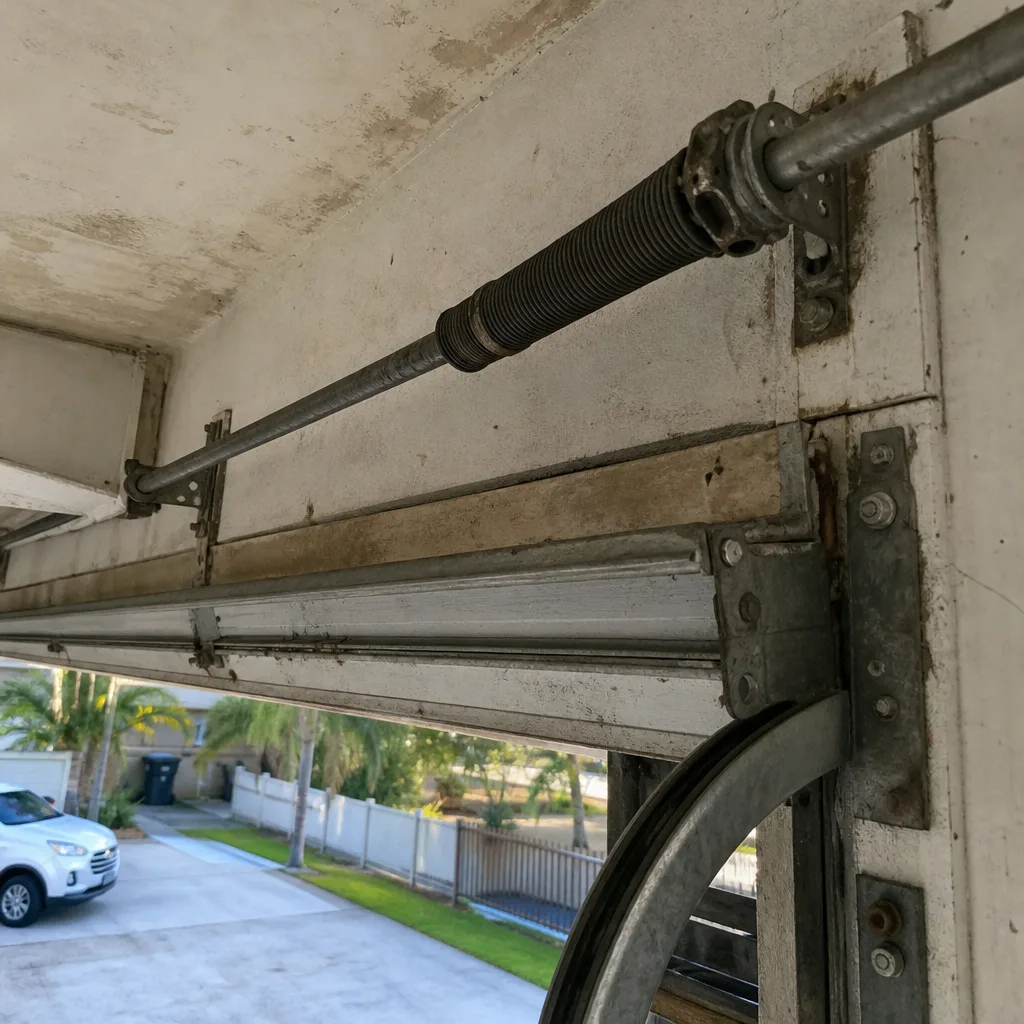
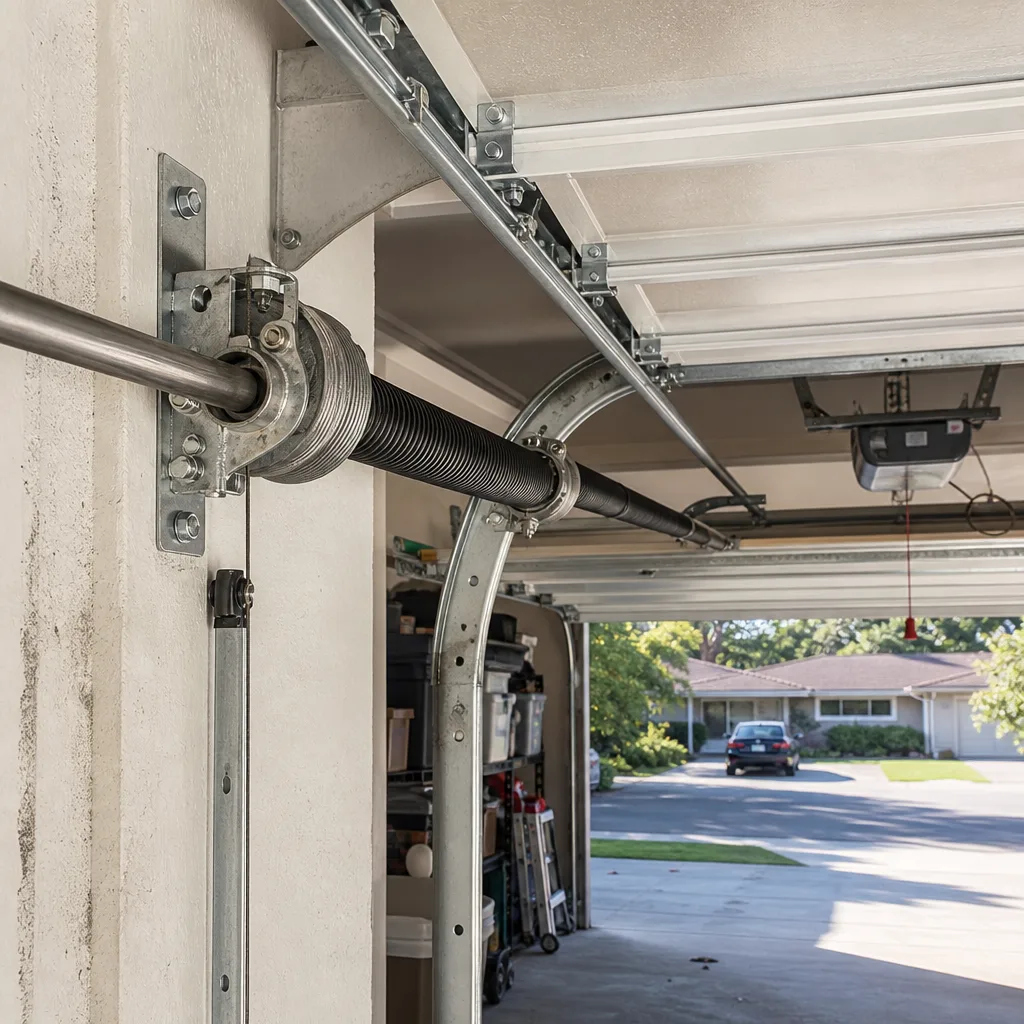
The torsion spring is the heavy, coiled steel component mounted horizontally above the closed door. It stores mechanical energy that counterbalances the weight of the door. When you push the button and the door goes up, the spring is doing most of the lifting. The opener motor is just guiding the movement.
In Miami, torsion springs fail for three reasons: rust, heat cycling, and metal fatigue. Rust from salt air weakens the coil, which concentrates stress at the point of the wire. Heat cycling happens because the spring warms and cools every day as the garage heats and cools. Over thousands of cycles, that repeated expansion and contraction fatigues the metal. Most residential torsion springs are rated for 10,000 cycles, which translates to roughly seven to ten years of normal use in a temperate climate. In Miami, the same spring often reaches failure in five to seven years. Near the coast, even sooner.
When a torsion spring snaps, it sounds like a gunshot. The door won’t open, even if the opener motor runs. Do not try to force the door open. Do not disconnect the opener manually and muscle it up. A door without a functioning spring weighs 150 to 300 pounds, and there is no good way to control it by hand. This is a professional repair. The spring holds enough tension to cause serious injury if mishandled. We don’t give DIY instructions for torsion spring replacement because the risk isn’t worth it. For help deciding, read our DIY vs Professional Garage Door: The Miami Homeowner’s Decision Guide, then call a technician.
Openers: Electronics in a Humid Room
The opener is the motor unit mounted to the garage ceiling that pulls a trolley along a rail, which moves the door. In Miami, openers fail for two main reasons: humidity and power surges. Humidity corrodes circuit boards and electrical contacts inside the motor housing. Power surges during summer thunderstorms can fry the control board entirely. If your opener works intermittently, makes a grinding sound without moving the door, or trips the breaker, the problem is usually electrical rather than mechanical.
When replacing an opener in Miami, choose a belt-drive unit if noise is a consideration (bedrooms above the garage), or a chain-drive if budget matters more. In terms of brands, we service and install LiftMaster, Chamberlain, and Genie in this market. LiftMaster is the workhorse for most Miami homes; Chamberlain is the same parent company’s consumer line and offers good value for standard doors. Genie makes solid units as well, and availability is strong in South Florida. The important thing with any opener in Miami is surge protection. A whole-garage surge protector or a dedicated surge strip on the opener outlet will save you money over time. This is a $30 part that prevents a $300 control board replacement.
Full Replacement: When to Repair, When to Replace, and What to Order
Repair is almost always cheaper than replacement, and a well-maintained steel door in Miami can last fifteen to twenty years. But there are clear signs that replacement is the better call:
- The door has rust through the panel, not just on it. Surface rust can be treated. A hole or a soft spot means the panel’s structural integrity is gone and the NOA rating is compromised.
- The door is dented from an impact. Even a small dent weakens the wind-load resistance. In a county where wind-load is a code requirement, a dented door is a compliance problem.
- The track system is bent. A bent track can often be repaired, but if the damage is extensive, the cost to replace the track and possibly the panels approaches the cost of a new door.
- You’re tired of patching it. If you’ve had three or more repairs in two years, the door is telling you something.
When you do replace, here’s the order of operations for a Miami home:
- Determine your wind speed zone and the required design pressure rating. This is non-negotiable and comes before aesthetics.
- Choose a material that balances salt resistance, impact performance, and budget. Galvanized steel with a good factory finish is the most common choice in Miami for standard homes. Aluminum is worth considering for coastal properties.
- Confirm the NOA. Get the number in writing. The installer should provide it as part of the quote.
- Select the right hardware package: stainless cables, galvanized or stainless hinges, and tracks specified in the NOA.
- Choose an opener sized for the door weight. An underpowered opener in Miami heat wears out in two to three years.
- Schedule installation during the dry season if possible, or at least during a stretch of clear weather. Installation goes faster and the door settles better in dry conditions.
A complete installed replacement in Miami typically runs $1,200 to $3,500 for a standard single garage door with a Miami-Dade NOA, a galvanized panel, and a mid-range LiftMaster or Chamberlain opener. Higher-end doors with impact-rated glass, insulated composite panels, or custom finishes go well beyond that.
Common Mistakes to Avoid
- Buying a door without an NOA. If it can’t produce a Miami-Dade Notice of Acceptance, it’s not a legal install in this county. You’ll find out at the permit desk or the next home sale.
- Using standard hardware store parts. A $12 hinge from a big-box retailer is painted steel. In Miami salt air, it’ll be rusted within a year. Use galvanized or stainless.
- Ignoring a door that opens slower than usual. Slow operation often means the springs are losing tension or the opener is struggling. Catch it early and it’s a spring replacement. Wait until it snaps and you might be replacing the door panel too.
- Lubricating with WD-40. This is the most common garage door mistake in Miami. WD-40 is a degreaser and water displacer. It strips the lubricant from rollers and hinges, which accelerates wear in our humidity.
- Skipping the post-storm inspection. Even if the door didn’t take a direct hit, salt spray and debris from a tropical system cause damage that compounds. A five-minute visual check after each named storm is worth it.
- Choosing the cheapest quote without asking about materials. A $99 spring job in Miami usually means a non-galvanized spring and no written guarantee. You’ll pay for it again in eighteen months.
- DIY-ing spring repair. Torsion springs carry hundreds of pounds of tension. An amateur attempting to replace one is how serious hand and face injuries happen. This is not the place to save money.
See the difference
 Before
 After
After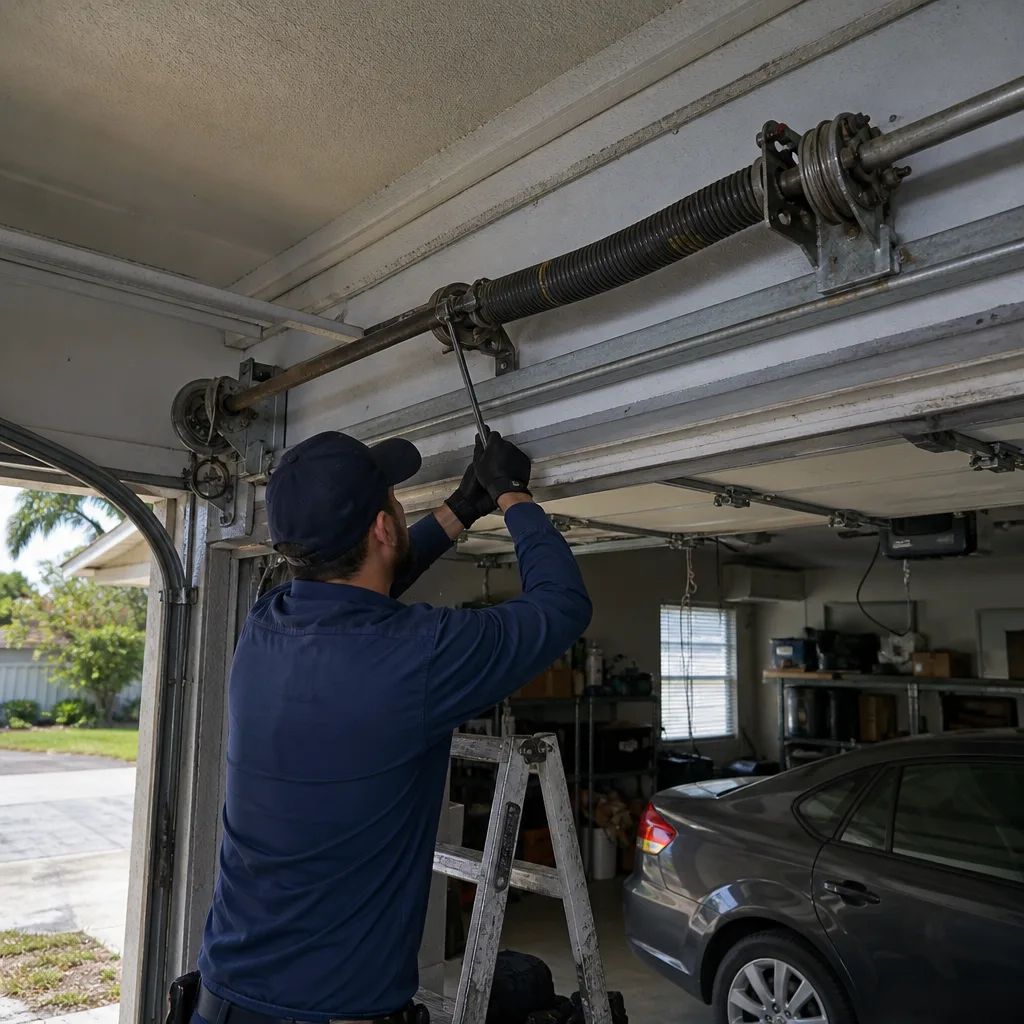 Before
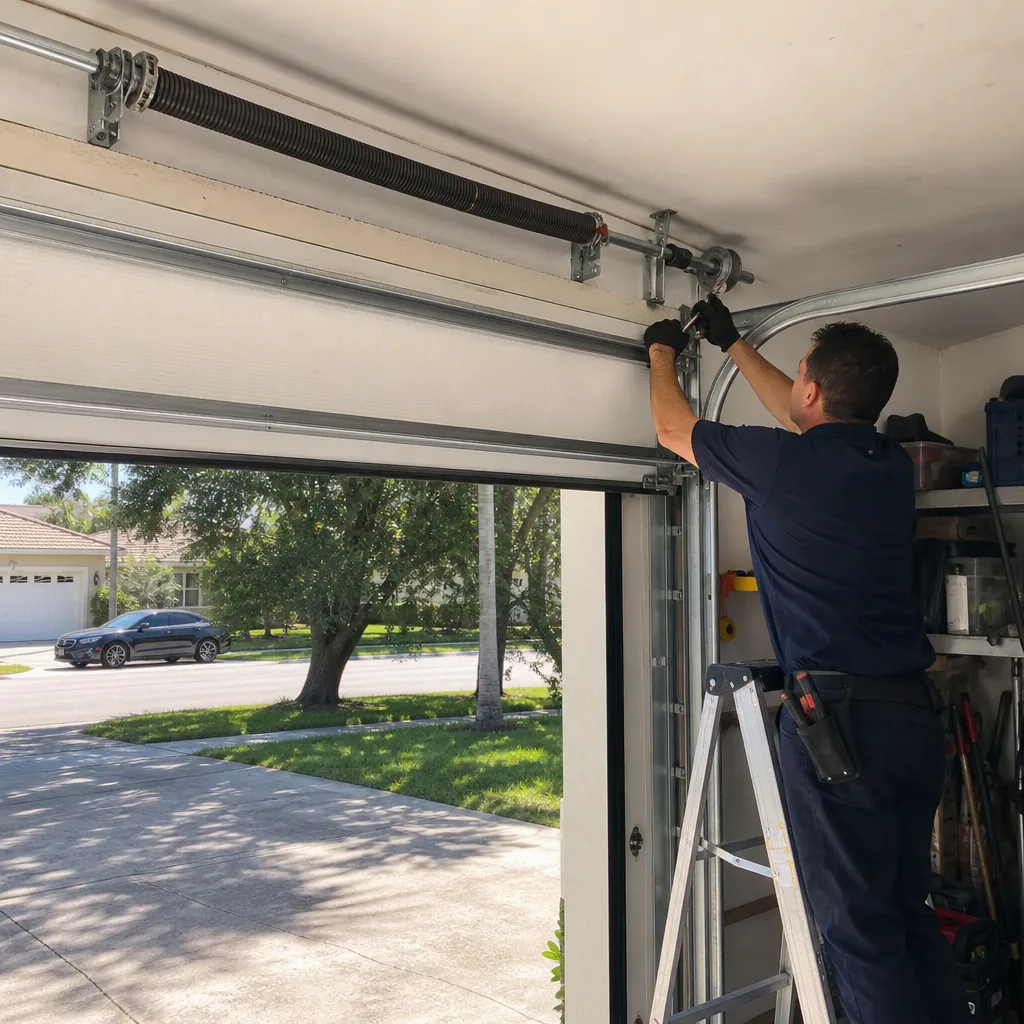 After
After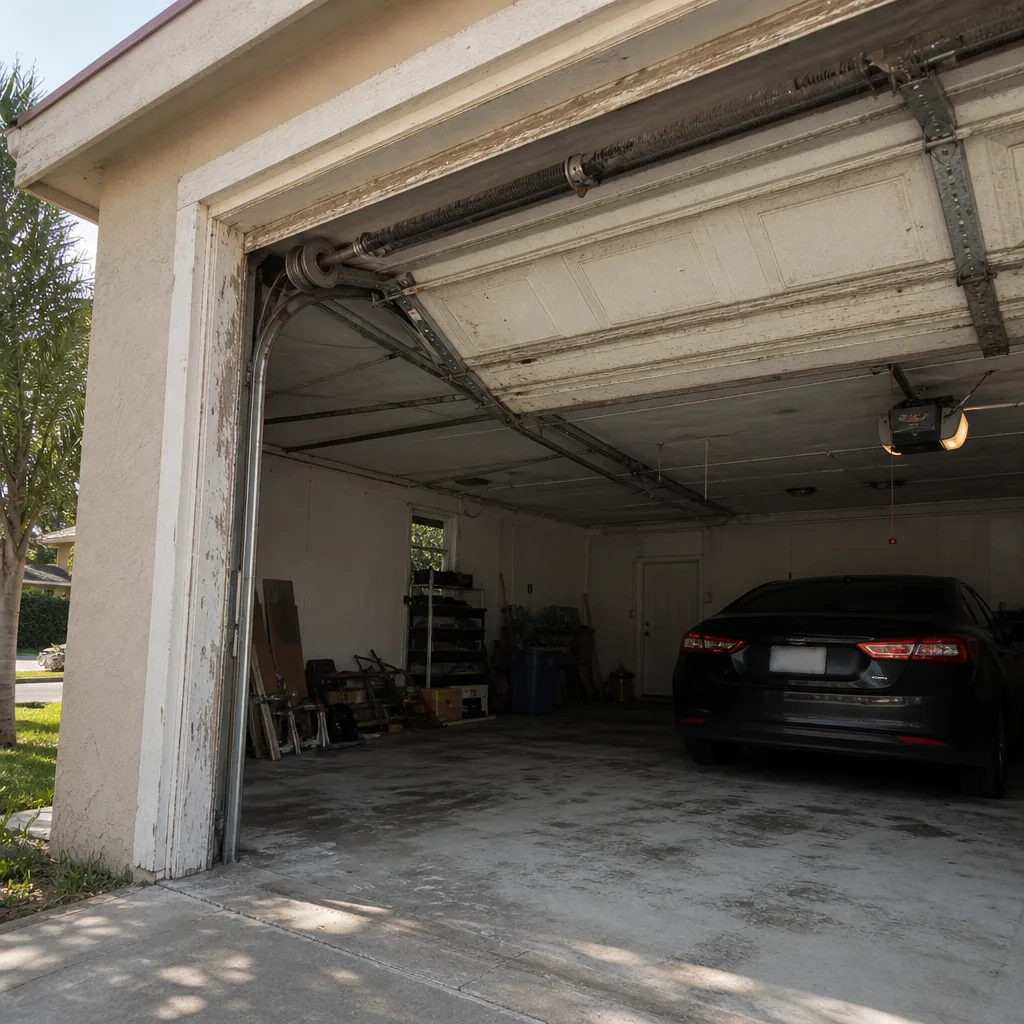 Before
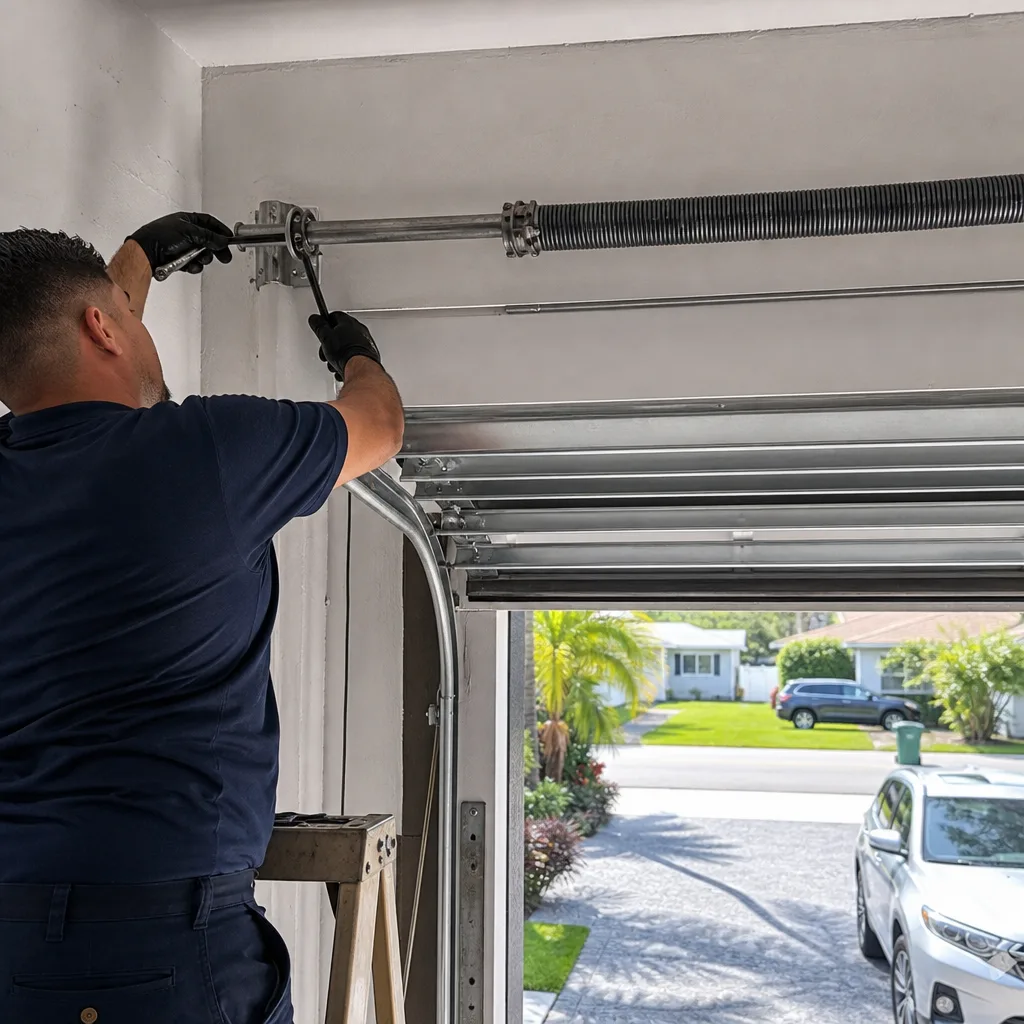 After
AfterWhen to Call a Professional
Some things you can handle yourself: lubricating rollers, visual inspections, cleaning tracks, testing the auto-reverse feature. But you should call a professional the moment you see a snapped spring, a frayed cable, a bent track, a door that won’t balance, or an opener that sparks or smokes. These are not maintenance items. They’re structural and safety issues, and they get worse every time you cycle the door. In Miami, the stakes are higher than elsewhere because a compromised door is a compromise of your home’s hurricane envelope. If the door fails in a storm, it’s not just a garage problem. It’s a house problem. Bramwell Garage Doors Miami offers free estimates in Miami. Call (850) 673-0645, and a live person answers. We’ll send a technician in a stated arrival window, put every price in writing before any work starts, and back the repair with a written guarantee. That’s the Kingswell standard, and it’s how we’ve run every Miami job since 2001.
Frequently Asked Questions
A single torsion spring replacement in Miami typically costs between $150 and $280, including the galvanized spring and labor. If your door has two springs and both are replaced together, which we recommend, expect $280 to $450. Call (850) 673-0645 for an exact quote. The estimate is free, and the price we quote is the price on the invoice.
Look for the NOA number on the approval documents or on a label affixed to the door itself. If you can’t find it, contact your local building department with your door’s make and model, and they can verify the approval status. If the door was never approved, it needs to be replaced or brought into compliance before certain permits or home sales can proceed.
Yes. Emergency repairs during hurricane season are common in Miami, and we run calls all summer. Availability can be tighter, especially in the days after a named storm passes. If your door is damaged before a storm, schedule the repair as early as possible. A compromised door is a serious vulnerability during a wind event.
Every three months. Miami’s heat and humidity break down lubricants faster than temperate climates, so quarterly lubrication is the right cadence for rollers, hinges, and springs. Use a garage-door-specific lubricant, never WD-40.
We do. Our technicians are authorized to service LiftMaster, Chamberlain, Genie, Raynor, and all other major brands. We install new openers, replace faulty ones, and repair circuit board, gear, and limit-switch issues on existing units.
No. We give you a written price before any work begins, and that’s the price you pay. If we find an additional issue during the repair, we stop and quote that separately before touching it. There are no door-step price changes with Bramwell Garage Doors Miami. That’s part of the Kingswell Guarantee, and it’s in writing on every job.
The Bottom Line
A Miami garage door lives a harder life than a garage door almost anywhere else in the country. Salt air, hurricane loads, intense UV, and a building code with no patience for shortcuts all shape what breaks and what it costs to fix. The good news is that all of this is manageable if you know what to look for. Verify the NOA before you buy. Demand galvanized or stainless hardware on every repair. Maintain on a June-to-November rhythm. And when something fails, get a written price before the work starts. That’s what we do at Bramwell Garage Doors Miami, and it’s how we’ve run this business since 2001. If you need a repair, a replacement, or just an honest inspection of what you’ve got, call (850) 673-0645. A live person answers, and the estimate is free.
Written by Marcus Ellery, Owner at Bramwell Garage Doors Miami, serving Miami since 2001.