
Last updated October 16, 2026
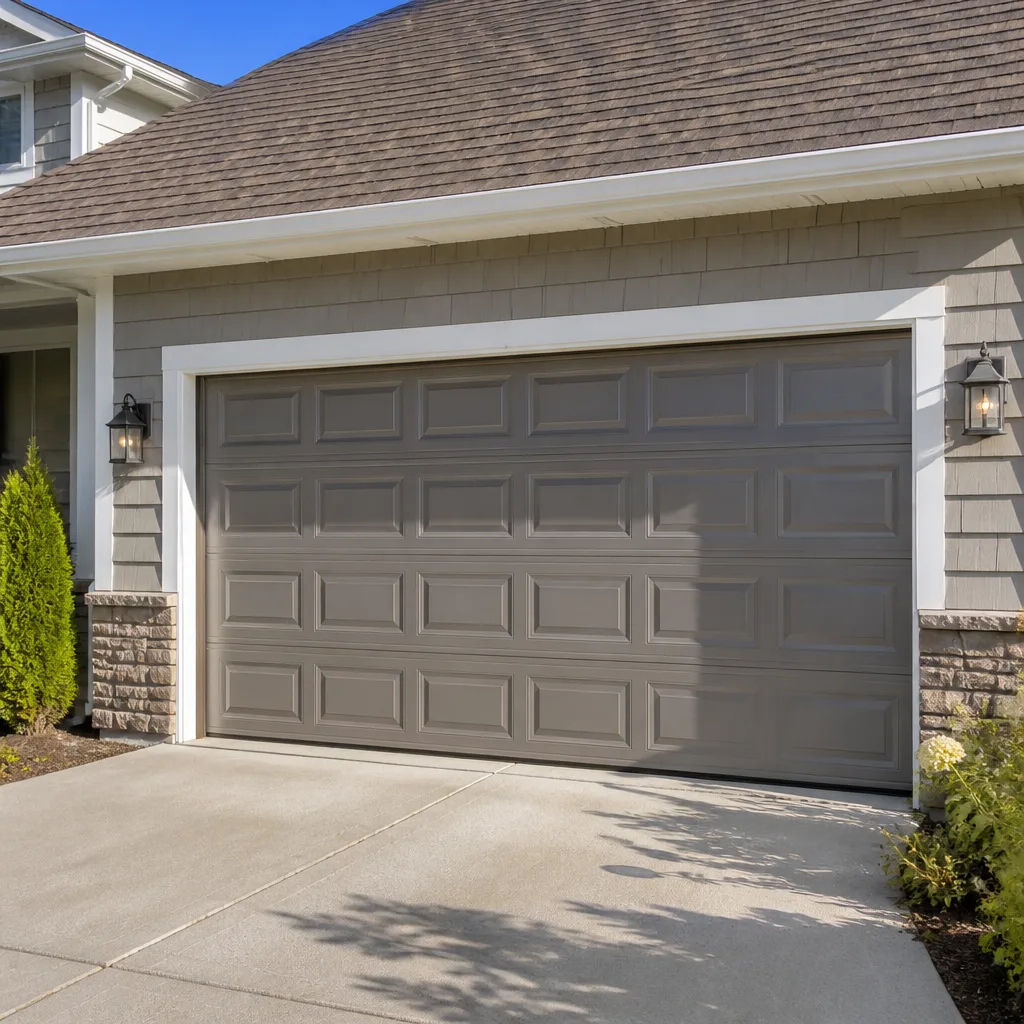 Raised-panel steel
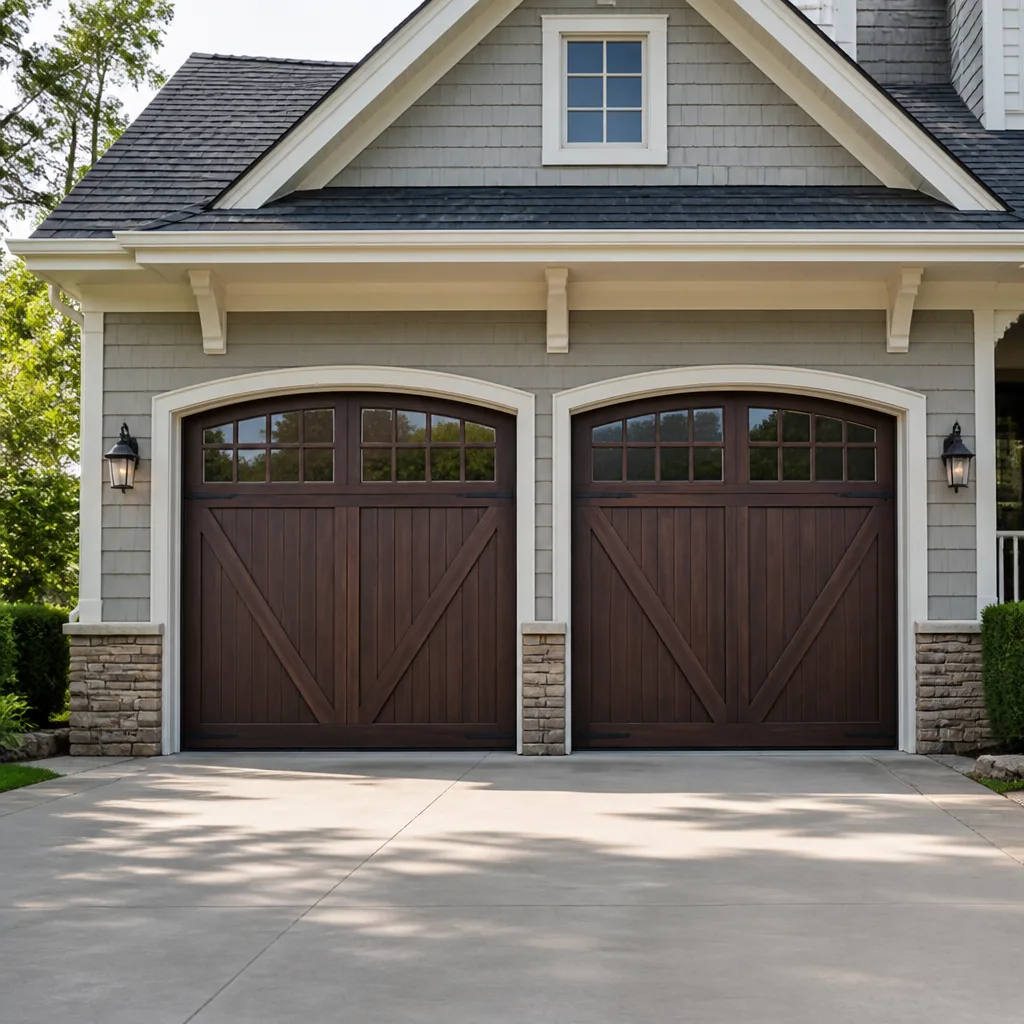 Carriage house
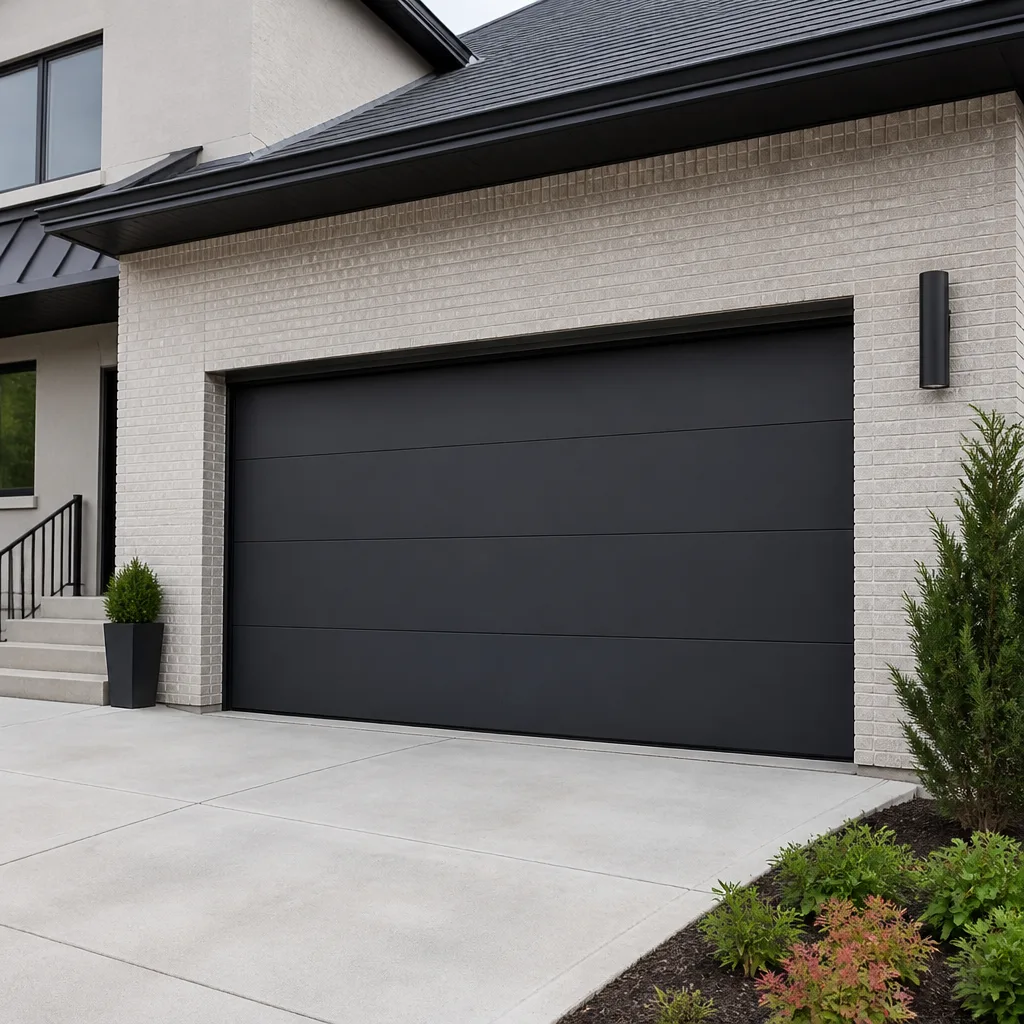 Modern flush
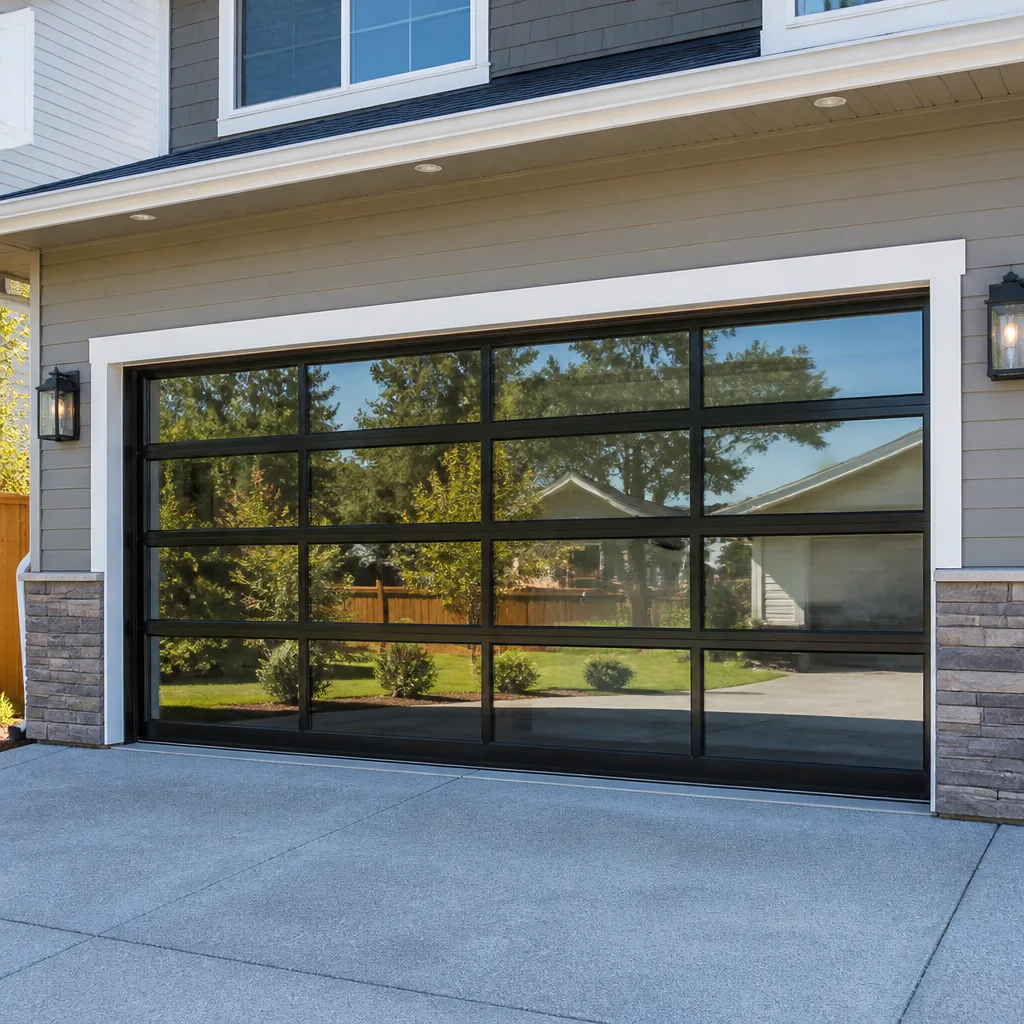 Full-view glass
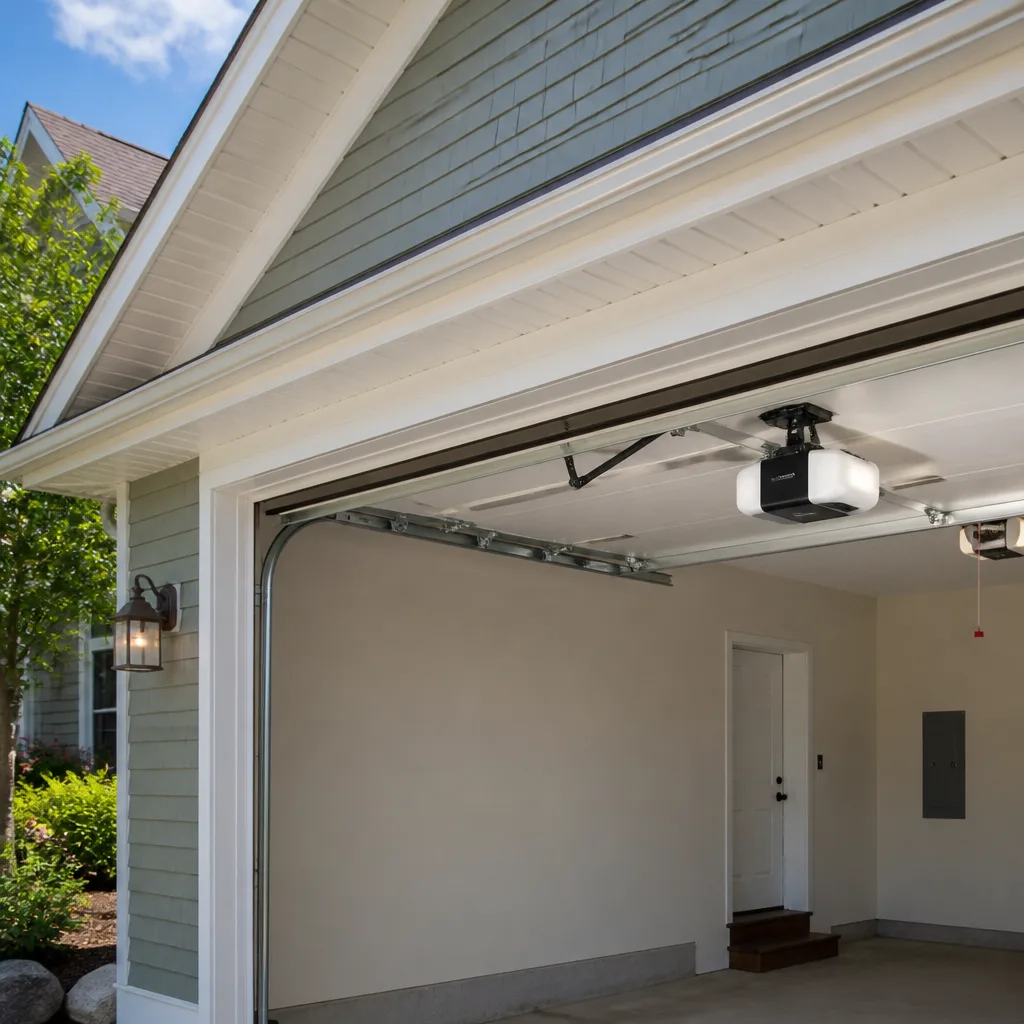 LiftMaster openers
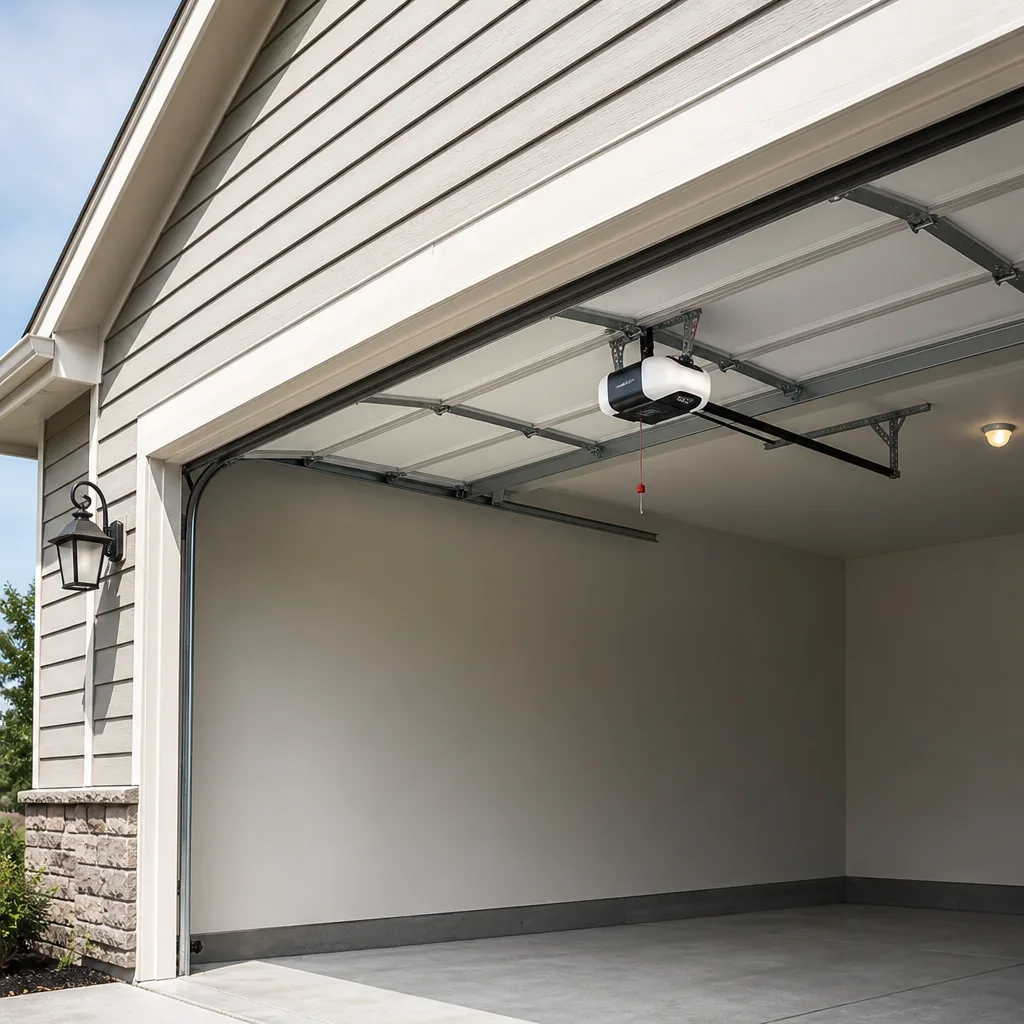 Chamberlain openers
Full 25-point door and opener safety check with every visit - springs, cables, rollers, tracks, and your LiftMaster or Chamberlain opener included
You get a price before we start. It does not change when the truck arrives.
Get your free estimateGarage Door Repair Maintenance Checklist for Miami Homeowners
Here’s a statistic most national maintenance guides won’t tell you: garage door hardware in Miami fails twice as fast as the same components in inland Florida, and it’s not because of usage. It’s the salt. Every east wind off Biscayne Bay carries microscopic salt particles that settle into roller bearings, hinge pins, and spring coils. Add 75% average humidity and you get a corrosion cycle that quietly eats hardware year-round. The number-one cause of preventable garage door failures in South Florida isn’t age – it’s salt-air corrosion on hardware that was never lubricated with the right product. Standard white lithium grease traps moisture against the metal; Miami doors need something different. This guide walks through the exact checklist our technicians use when they inspect doors in Kendall, Coral Gables, Hialeah, and across Miami-Dade, organized by the failure points we actually see on our Garage Door Repair services calls in the field.
Quick Answer
A garage door maintenance checklist for Miami homeowners should cover four seasons of work: pre-hurricane reinforcement checks in April and May, post-storm inspections in October, dry-season lubrication in January, and monthly visual checks on springs, rollers, cables, and the bottom seal. The most important Miami-specific task is lubricating moving parts with a moisture-displacing lubricant rather than white lithium grease, which accelerates rust in coastal humidity. Most homeowners can safely handle lubrication and visual checks, but any spring, cable, or track adjustment should be left to a trained technician.
Styles & brands we work with
Table of Contents
- Why Miami Needs Its Own Maintenance Calendar
- The Monthly Visual Inspection: 10 Minutes That Save Real Money
- Lubrication in Miami: What to Use, What to Avoid, and Why It Matters Here
- Hurricane-Ready: The April Pre-Season Checklist
- The Post-Storm Walkthrough: What to Check After Every Named Storm
- The January Dry-Season Deep Clean and Adjustment
- DIY vs. Call a Pro: A Clear Line for Every Task
- Common Mistakes to Avoid
- When to Call a Professional
- Frequently Asked Questions
Why Miami Needs Its Own Maintenance Calendar
Garage doors are mechanical systems, and mechanical systems respond to their environment. A maintenance schedule written for Phoenix or Minneapolis has almost nothing to say to a homeowner in Miami, where the garage door faces a completely different set of stresses. We’ve been working on Bramwell Garage Doors Miami home service calls since 2001, and the pattern is consistent: doors that get seasonal attention tuned to South Florida’s weather cycles last years longer than doors that get generic “spray some WD-40 every few months” advice.
Here’s what makes Miami different:
- Salt air. Any home within five miles of the coast gets regular salt deposition on exposed metal. Hinge pins, roller stems, spring coils, and cable ends all corrode faster than inland equivalents.
- Humidity above 70% for most of the year. Moisture doesn’t just sit on surfaces – it works into bearing surfaces and reacts with whatever lubricant is present. The wrong lubricant becomes a rust accelerant.
- Hurricane season from June 1 through November 30. Wind loads on a garage door are enormous, and a door that isn’t properly reinforced becomes the most vulnerable opening in the house.
- Intense UV exposure. The bottom seal and weatherstripping on South Florida doors crack from sun exposure faster than almost anywhere else in the country.
- Afternoon thunderstorms in the wet season. Rapid temperature and humidity swings cause metal components to expand and contract, loosening fasteners and shifting track alignment over time.
A Miami-specific maintenance calendar breaks the year into three natural windows: pre-season preparation in April, post-storm recovery in October, and dry-season deep maintenance in January. Between those three anchors, a monthly visual check catches small problems before they become emergency Garage Door Repair in Miami calls.
The Monthly Visual Inspection: 10 Minutes That Save Real Money
Most garage door failures give warning signs weeks or even months before they become breakdowns. The problem is that most homeowners never look at their garage door unless it’s opening or closing. A monthly visual inspection takes ten minutes and catches the early indicators that save hundreds of dollars in emergency repair work later.
Here’s the complete monthly checklist, in order:
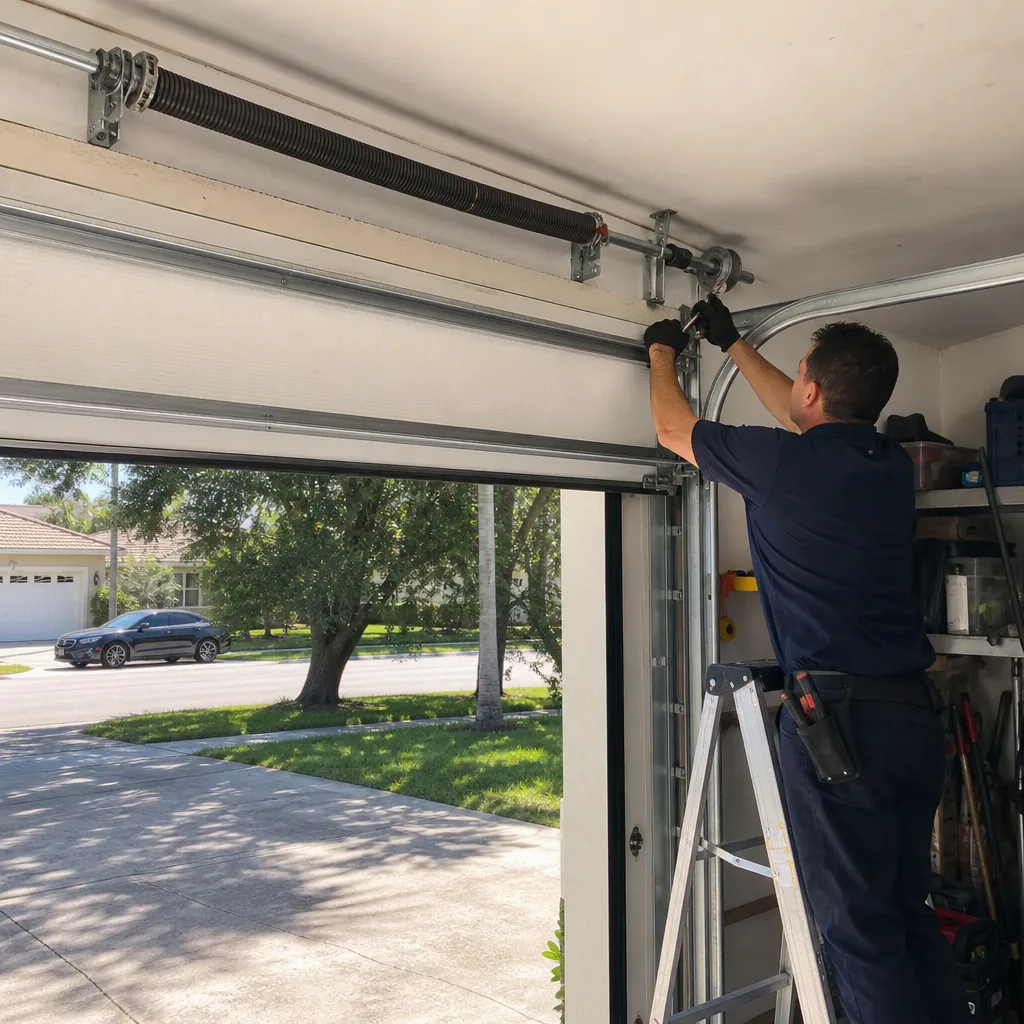
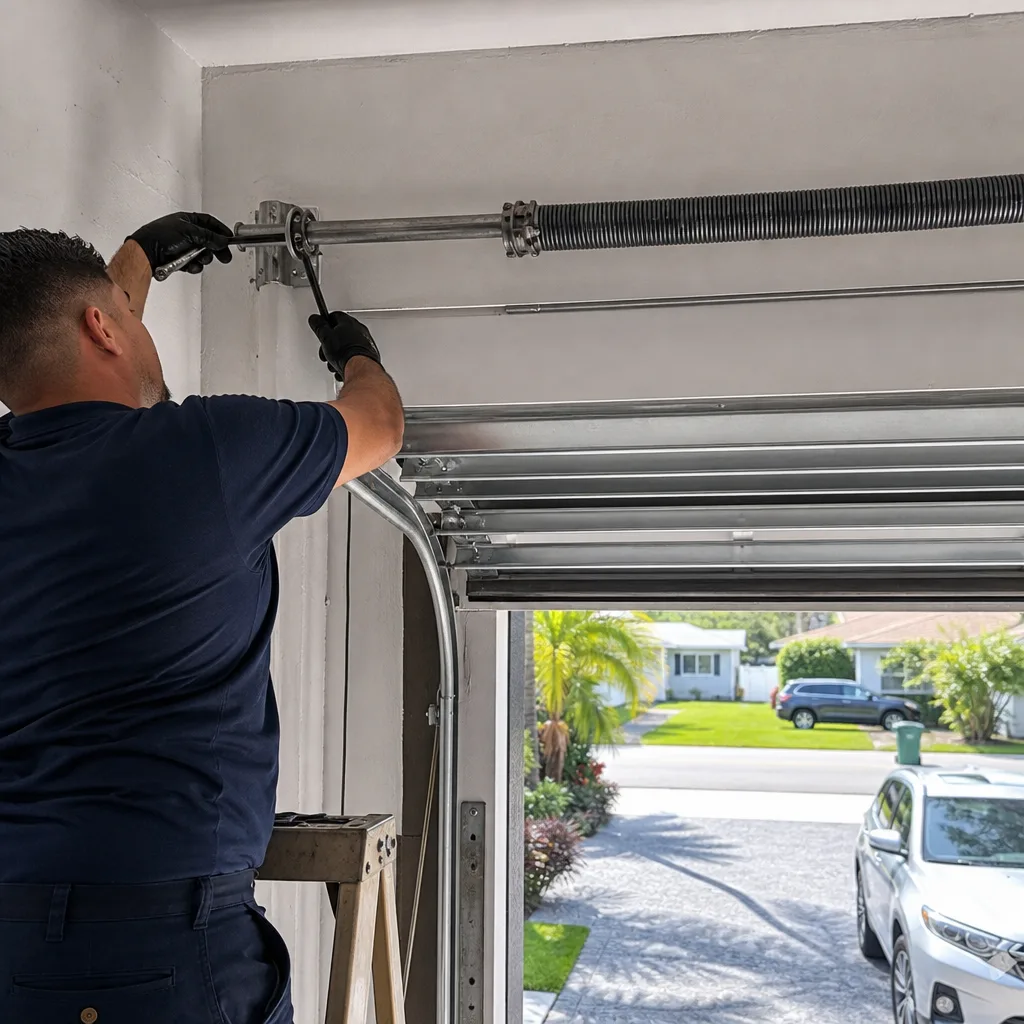
- Stand in the driveway with the door closed and look at the spring assembly. On a torsion spring system – the heavy coil mounted on a metal shaft above the door – check for rust streaks, gaps in the coil, or any sign that the spring is pulling away from the center bracket. On an extension spring system – the two long springs running along the horizontal tracks – check for stretched or deformed coils and rust at the safety cable connection points. Do not touch any spring component during this check. These springs store enough energy to cause serious injury if they fail while under tension.
- Open the door and watch it travel. It should move smoothly without jerking, hesitating, or scraping. Listen for grinding, squealing, or popping sounds. A door that shudders on the way up often has a worn roller or a track that’s drifted out of alignment.
- Check the balance manually. Close the door, pull the red emergency release handle to disconnect the opener, and lift the door by hand. It should lift smoothly with moderate effort and stay in place when you let go at the halfway point. A door that falls or requires real muscle to lift has a spring problem and needs professional attention.
- Inspect all rollers. Nylon rollers with visible cracks or flat spots need replacement. Steel rollers with rust on the stems are near failure in Miami’s humidity. Look for any roller that wobbles in the track as the door moves.
- Check the cables on both sides. The lift cables run from the bottom brackets up to the drums or pulleys. Look for frayed strands, rust, or any kink in the cable. A frayed cable under tension is a failure waiting to happen – call a technician immediately if you see one.
- Look at the bottom seal. The rubber strip along the bottom of the door should sit flush against the garage floor across its entire width. Miami sun cracks this seal faster than anything else on the door. Cracks, gaps, or daylight visible under the closed door means it’s time for replacement.
- Check the safety reversal system. Place a roll of paper towels or a wooden block in the door’s path and close it. The door should reverse within two seconds of contacting the object. Test the photoelectric sensors by waving your foot through the beam while the door is closing – it should reverse immediately. This is a safety system, not a convenience feature, and it needs to work every time.
- Inspect hinges and fasteners. Look at every hinge plate where it attaches to the door sections. Check for rust, loose bolts, or hairline cracks in the metal. Miami’s humidity loosens fasteners faster than dry climates, and a loose hinge puts uneven stress on the entire door.
Ten minutes a month. That’s the whole commitment for the monthly check, and it catches the vast majority of preventable failures before they strand a car in the driveway or leave a home unsecured overnight.
Lubrication in Miami: What to Use, What to Avoid, and Why It Matters Here
This is the section where most generic garage door guides fail Miami homeowners. The standard advice – “spray white lithium grease on all moving parts” – is actively harmful in South Florida’s coastal climate. White lithium grease is a thick grease that forms a sticky film. In Miami’s humidity, that film traps moisture and salt against the metal surface it was supposed to protect. We see the result on service calls throughout Miami-Dade: hinges and rollers caked in a greasy paste that’s actively accelerating corrosion underneath.
The right approach for Miami is a moisture-displacing lubricant designed for metal-on-metal contact in humid environments. Here’s the breakdown:
What to use:
- A silicone-based spray lubricant for nylon rollers, hinges, and the lock mechanism. Silicone doesn’t attract dust, doesn’t trap moisture, and performs consistently in high humidity.
- A penetrating lubricant – something like a dedicated garage door lubricant spray, which is different from general-purpose WD-40 – for steel rollers and hinge pins that are developing surface rust. These products are formulated to displace moisture from bearing surfaces.
- A dedicated garage door spring lubricant applied sparingly to torsion spring coils. Springs need lubrication on the coil surface to prevent binding during rotation, but the product must be thin enough not to gum up between coils.
What to avoid in Miami:
- White lithium grease. It traps moisture and salt. In a Miami garage, it becomes a corrosion accelerator. This is the single most common lubrication mistake we see.
- WD-40. It’s a solvent and water displacer, not a long-term lubricant. It strips away whatever lubricant was there and leaves metal surfaces basically unprotected within days.
- Motor oil, axle grease, or any petroleum-based product. These attract dust, break down in heat, and create a sticky film that holds Miami humidity against the metal.
- Anything marketed as “all-purpose.” Garage door components need specific lubrication for specific surfaces. An all-purpose product is usually the wrong viscosity for every part of a garage door.
How often to lubricate in Miami:
For homes within three miles of the coast, lubricate every three months. Salt deposition is real and consistent. For homes further inland – West Kendall, Doral, Hialeah Gardens – every four to six months is usually sufficient. The January dry-season service is the anchor point for a full lubrication pass, with touch-ups in April before hurricane season and in October after the peak storm months.
One final note on lubrication: less is more. Over-lubricating creates drips that collect on the door surface, attract dirt, and stain the panel. A light, even coat on the specific contact points is all that’s needed.
Hurricane-Ready: The April Pre-Season Checklist
April is the month to prepare a Miami garage door for hurricane season. Building codes in Miami-Dade are among the strictest in the country for wind-borne debris protection, and for good reason: a garage door that fails during a storm doesn’t just let water in. It creates an opening that allows wind pressure to build inside the garage, which can lift the roof off the house.
The April pre-season checklist focuses on structural integrity and wind resistance:
- Verify that your door is actually hurricane-rated. Since the 2002 Florida Building Code, new and replacement garage doors in Miami-Dade must meet wind-load requirements. If your door predates that code – or if you’re not sure – check for a wind-load label on the inside of the door panel. The label will state the design pressure rating. A door without a label on a house built before 2002 may not meet current wind requirements, and that’s worth discussing with a professional before storm season peaks.
- Inspect horizontal and vertical reinforcement struts. Hurricane-rated doors have metal reinforcement struts bolted across the inside of each panel section. These struts are what give the door its wind resistance. Look for rust at bolt holes, any bowing or deformation in the strut itself, and any bolt that has loosened. A loose strut bolt means the strut isn’t carrying its share of the wind load.
- Check anchor bolt integrity. The vertical track brackets and the bottom corner brackets should be attached with substantial bolts, not screws. Inspect every attachment point for rust, looseness, or cracking in the surrounding concrete or steel. Miami’s humidity causes anchor hardware to corrode from the inside out.
- Test the bottom seal for UV cracking. The rubber bottom seal is also a water barrier during driving rain. After a winter of intense Miami sun, check the seal for hairline cracks, brittleness, or gaps. A cracked seal lets wind-driven rain into the garage during even a minor storm.
- Check the door’s side weatherstripping. The vertical rubber strips along the door’s edge serve the same water-exclusion function. Look for gaps, tears, or areas where the stripping has pulled away from the door jamb.
- Confirm the springs and cables are in good condition before storm season starts. A garage door that can’t be opened after a storm because the spring failed during it is a compounding problem. The last thing anyone needs is a broken spring when the power is out and the car needs to get to a safe location.
Hurricane preparation for a garage door is not a DIY project for anything beyond the visual checks above. Structural reinforcements, wind-load upgrades, and any adjustment to spring tension should be handled by a technician who understands Miami-Dade code requirements and can verify the work in writing. We’ve prepared Garage Door Installation in Miami jobs for hurricane season since 2001, and the universal rule is the same: the door either meets the wind standard or it doesn’t, and the difference is in the hardware, not the paint.
The Post-Storm Walkthrough: What to Check After Every Named Storm
After any named storm passes through Miami – even one that doesn’t make direct landfall – a garage door deserves a walkthrough before normal use resumes. Wind gusts during a storm can shift track alignment, loosen fasteners, and stress components that were already near the end of their service life. The post-storm check is about catching hidden damage before it becomes a mid-cycle failure.
The October post-storm checklist covers:
- Run the door through a full open-close cycle and listen. Any new grinding, popping, or squealing sound is a symptom. Compare it to what the door sounded like before the storm. If something is different, investigate before normal daily use puts load on a compromised component.
- Check track alignment on both sides. Wind pressure can bow a vertical track or push it sideways. Stand at the back of the garage and sight down each track. Both tracks should be perfectly straight and parallel to each other. Any visible curve or convergence is a problem.
- Inspect roller engagement. After a storm, check each roller to confirm it’s fully seated within the track channel. A roller that has popped partially out of the track will bind, chew up the track surface, and eventually fail.
- Look for new rust streaks on hardware. Saltwater driven by storm winds accelerates corrosion far beyond the normal Miami baseline. Any component that shows fresh rust streaks after a storm will likely need attention sooner than its scheduled maintenance interval.
- Check the bottom seal for debris damage. Storm debris – small rocks, sticks, palm fronds – gets driven against the door during high winds and can gouge or tear the bottom seal.
- Verify the emergency release operates correctly. If the power went out during the storm and you used the emergency release to manually open the door, verify that reconnecting the opener restores normal operation smoothly.
If any of these checks reveal a problem, address it before the next storm. October in Miami is still well within hurricane season, and a door with compromised hardware going into a second storm is a door that’s much more likely to fail exactly when it’s needed.
The January Dry-Season Deep Clean and Adjustment
January is Miami’s dry season – relatively low humidity, cooler temperatures, and the best window of the year for deeper garage door maintenance that involves cleaning, adjustment, and servicing. The dry-season service is the anchor point for the entire maintenance calendar, and it’s the right time to handle tasks that are less comfortable (or less effective) during the humidity of Miami’s wet season.
Here’s the January deep maintenance protocol:
- Clean the tracks thoroughly. Over the wet season, the door tracks accumulate salt residue, sand, and general grime. Wipe down the interior track surfaces with a dry cloth first, then a damp cloth with a mild cleaner, then a final dry pass. Do not use any grease in the tracks – the tracks themselves should never be lubricated. A clean, dry track surface is what the rollers need.
- Deep-clean the door surface. Salt build-up on door panels is more than cosmetic – it contributes to panel corrosion over years. A gentle wash with automotive soap and a soft brush removes deposited salt. Avoid pressure washers, which can force water into panel seams and hardware.
- Inspect and service the rollers as needed. This is the time to check each roller’s bearing. Nylon rollers have a design life of 7-10 years in normal conditions; in Miami’s coastal environment, 5-7 years is more realistic. A roller that doesn’t spin freely needs replacement – and this is a task that requires removing the roller from the track, which in turn requires handling the spring tension. Leave roller replacement to a professional unless you have specific training and equipment.
- Check and tighten all fasteners. The cooler, drier January air is the best time of year in Miami for this work. Go through the hinge plates, track brackets, and opener mounting hardware and snug any loose fasteners. A loose bolt in a Miami garage will be a corroded loose bolt by summer.
- Service the opener. Unplug the opener, wipe down the motor housing, check the drive belt or chain for proper tension, and clean the safety sensor lenses with a soft cloth. Dirty sensor lenses are one of the most common causes of opener malfunction we see in Miami service calls.
- Lubricate everything on the lubrication schedule. If you’ve been keeping up with quarterly lubrication, the January service is a touch-up pass. If not, this is the catch-up point.
The January deep maintenance session takes about an hour for a homeowner who’s comfortable with the DIY-safe items on the list. For anyone who isn’t comfortable – or who wants the inspection done with a trained eye and a written record – this is also the most common time of year for homeowners to schedule a professional Garage Door Repair in Miami maintenance visit.
DIY vs. Call a Pro: A Clear Line for Every Task
Most garage door maintenance guides blur the line between what a homeowner can safely do and what requires a trained technician, but knowing how to hire the right professional matters just as much. The blur is dangerous. Garage door springs – particularly torsion springs, the coil mounted above the door that stores the lifting energy – release lethal force when they fail or are mishandled. Cables under tension can snap and cause severe lacerations. Tracks under load can pinch or crush.
Here’s the clear division, based on what we see on service calls throughout Miami-Dade:
DIY-safe tasks (no special tools or training required):
- Monthly visual inspection of springs, cables, rollers, and tracks
- Lubrication of hinges, rollers, and springs with the right Miami-appropriate products
- Cleaning tracks (never lubricating them)
- Testing the safety reversal system
- Testing the manual balance of the door
- Washing the door surface to remove salt build-up
- Visual inspection of bottom seal and weatherstripping
- Cleaning photoelectric sensor lenses
Professional-only tasks (do not attempt these yourself):
- Any adjustment, repair, or replacement of torsion or extension springs – these springs are under extreme tension and can cause serious injury or death if mishandled
- Any cable repair or replacement – cables under load are just as dangerous as springs
- Track removal, straightening, or replacement
- Roller replacement (requires releasing spring tension to access the rollers)
- Any work on the opener motor, drive mechanism, or internal electronics beyond basic cleaning
- Hurricane-rated door reinforcement installation or modification
- Balance adjustment of a door that fails the manual balance test
One of our own technicians put it well: “If the component is holding tension, it’s holding danger.” The monthly checks on this list are designed to tell you when something is wrong. Fixing what’s wrong – when it involves springs, cables, or track work – is exactly what Garage Door Spring Repair in Miami professionals are trained and equipped to handle safely.
Common Mistakes to Avoid
- Using white lithium grease on Miami hardware. This is the most common maintenance mistake we see. The grease traps salt and moisture against metal surfaces, accelerating corrosion on exactly the components it’s meant to protect. Use a silicone-based or dedicated garage door lubricant instead.
- Lubricating the tracks. Garage door tracks should be clean and dry. Adding grease or oil to the track surfaces creates a sticky mess that attracts debris, interferes with roller travel, and doesn’t help anything. The lubrication points are the rollers, hinges, and springs – never the track itself.
- Ignoring a door that’s “still working” but showing warning signs. A door that shudders, squeals, or struggles to lift is sending signals. Those signals don’t get better on their own – they get worse, usually at the worst possible time (e.g., during a storm, on a morning when the car needs to get out, on a holiday weekend).
- Delaying a spring replacement until failure. Torsion springs have a cycle life – usually 10,000 cycles for standard springs, which translates to roughly 7-9 years of typical use. When a spring is near the end of its rated life, replacement before failure is dramatically cheaper than emergency replacement after failure, which often includes damage to cables, tracks, and sometimes the door itself.
- DIY repair attempts on springs and cables. Every year, homeowners are seriously injured attempting to repair garage door springs without proper training and tools. The money saved is never worth the risk. This is the one item on any maintenance list that deserves absolute respect for the forces involved.
- Skipping hurricane-season preparation because “we’ve never had a problem.” Miami-Dade’s building codes exist because the problems are real and the consequences are severe. A door that has never been checked for wind resistance is a door with an unknown safety margin.
- Using household lubricants because “the can says it works for everything.” Kitchen spray oil, motor oil, silicone spray meant for other applications – these all create problems on garage door components. A dedicated garage door lubricant costs between $10 and $15 and lasts for multiple applications. It’s one of the cheapest maintenance investments a Miami homeowner can make.
When to Call a Professional
Some garage door issues are maintenance items. Others are repair items, and knowing the difference saves money. Call a technician when you see a frayed cable, hear a loud bang from the spring area, find the door will not open even after checking the opener, or notice that the door falls quickly during a manual balance test. These are all signs of components at or near failure, and they will not self-correct. Bramwell Garage Doors Miami offers free estimates in Miami – call (850) 673-0645 to schedule an inspection. Our technicians arrive within a stated window, present a written price before any work begins, and leave the job site clean. Every repair carries the 365-Day Done Right Promise in writing: if a covered repair fails within a year, we come back and fix it at no charge.
Frequently Asked Questions
For homes within three miles of the coast in Miami, every three months is the right interval. Salt air and high humidity demand more frequent lubrication than inland climates. Homes further from the coast – West Kendall, Doral, parts of Hialeah – can usually extend to every four to six months. Use a silicone-based or dedicated garage door lubricant, never white lithium grease, which traps moisture and accelerates rust in coastal conditions. Call (850) 673-0645 if you want a technician to handle the full lubrication service along with a written inspection.
A professional garage door maintenance visit in Miami typically runs $75 to $150 for a full inspection, lubrication, balance check, and safety system testing. Replacement parts – rollers, bottom seals, weatherstripping – are priced separately, with most common parts ranging from $15 to $60. At Bramwell Garage Doors Miami, the price is quoted and agreed in writing before any work starts, so the invoice total matches the number you approved. Call (850) 673-0645 for an exact quote.
Yes, the monthly visual checks, lubrication, cleaning, and safety system testing on this checklist are all DIY-safe. The line is clear: any task involving springs, cables, track removal, or roller replacement requires a professional. Torsion springs – the coil mounted above the door that stores lifting energy – can cause serious injury if mishandled. If a visual check reveals a problem with any tension-bearing component, schedule a professional inspection. Estimates are free at (850) 673-0645.
Check the inside of the door panel for a wind-load label that states the design pressure rating. Doors installed after the 2002 Florida Building Code in Miami-Dade should carry this label. If your door lacks a label on a pre-2002 home – or if you’re unsure – a technician can assess the door’s reinforcement struts, anchor bolts, and overall wind resistance. Hurricane-rated doors from brands like Amarr, Wayne Dalton, and Raynor are engineered to the Miami-Dade standards, but older doors often need retrofitting or replacement to meet current code.
Look for rust streaks on the spring coils, visible gaps in the coil (indicating a fracture), a door that feels unusually heavy when lifted manually, or a door that won’t stay in place at the halfway point. South Florida’s humidity accelerates spring corrosion, so coastal Miami homes often see spring life spans at the shorter end of the typical 7-9 year range. If you see any of these signs, call (850) 673-0645 – a technician can assess the spring condition before a complete failure strands your door closed.
Yes. Our technicians are authorized to service all major brands including LiftMaster, Chamberlain, Genie, Clopay, Amarr, Wayne Dalton, Craftsman, and Raynor. We work on doors from every era and manufacturer, including legacy and discontinued models. The 365-Day Done Right Promise applies to every repair regardless of brand: if a covered repair fails within a year, we return and correct it at no charge.
The Bottom Line
Miami garage doors fail faster than doors almost anywhere else in the country, but the failures are preventable. The right maintenance calendar, the right lubricants, and the right line between DIY and professional work make the difference between a door that lasts 8 years and one that lasts 20. This checklist gives you the monthly, seasonal, and storm-specific routines that match South Florida’s actual conditions – not a generic list written for some other climate – and you can find more guides & resources on our blog for year-round door care. If you find something that needs attention, or if you’d rather have a trained eye on the door, call (850) 673-0645 for a free estimate. A live person answers, 24 hours a day, 7 days a week.
Written by Marcus Ellery, Owner at Bramwell Garage Doors Miami, serving Miami since 2001.
See the difference
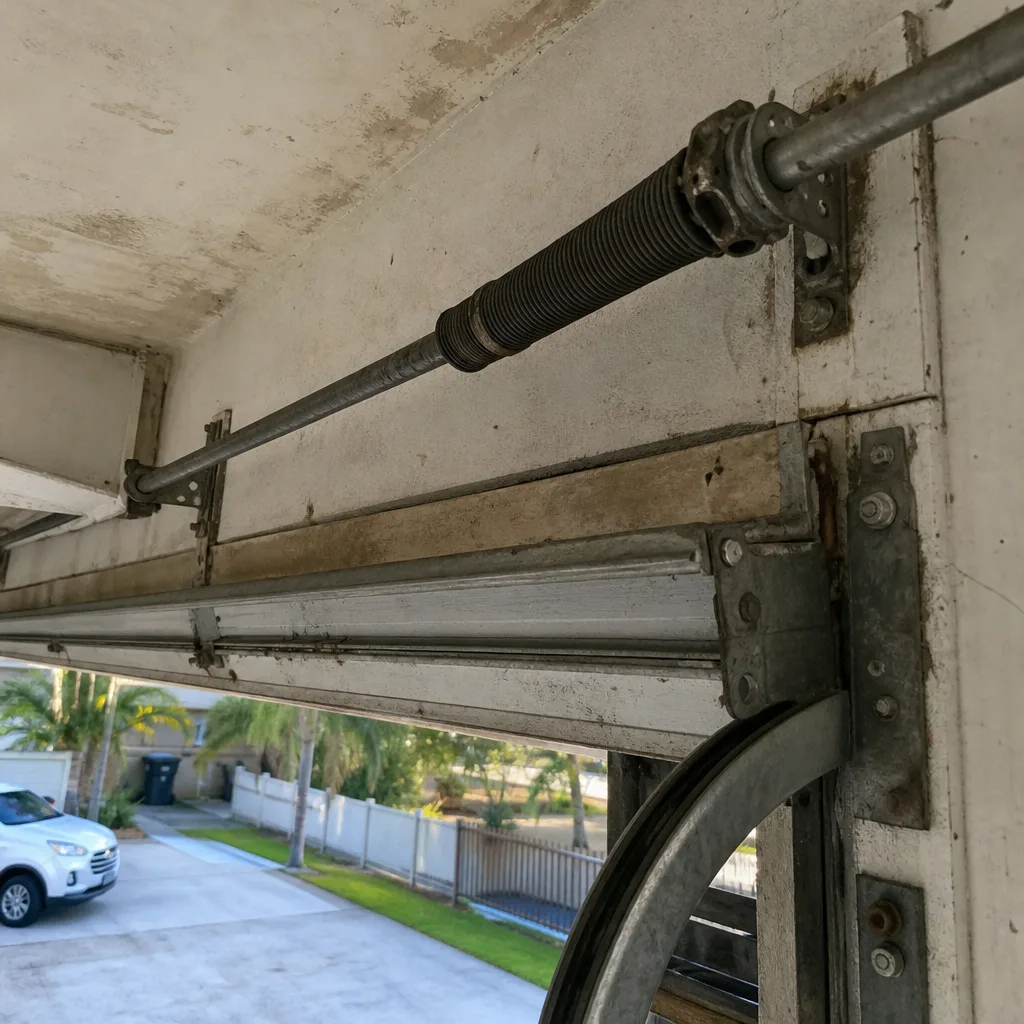 Before
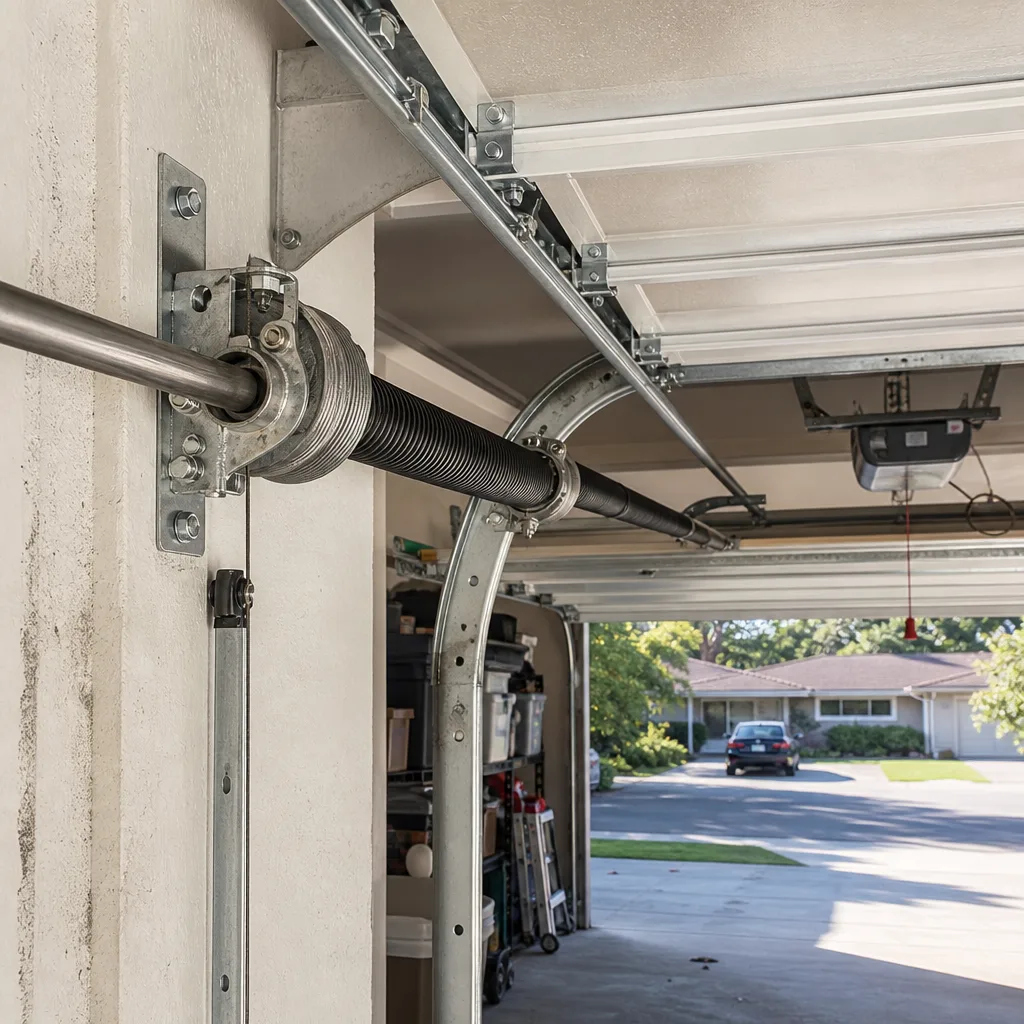 After
After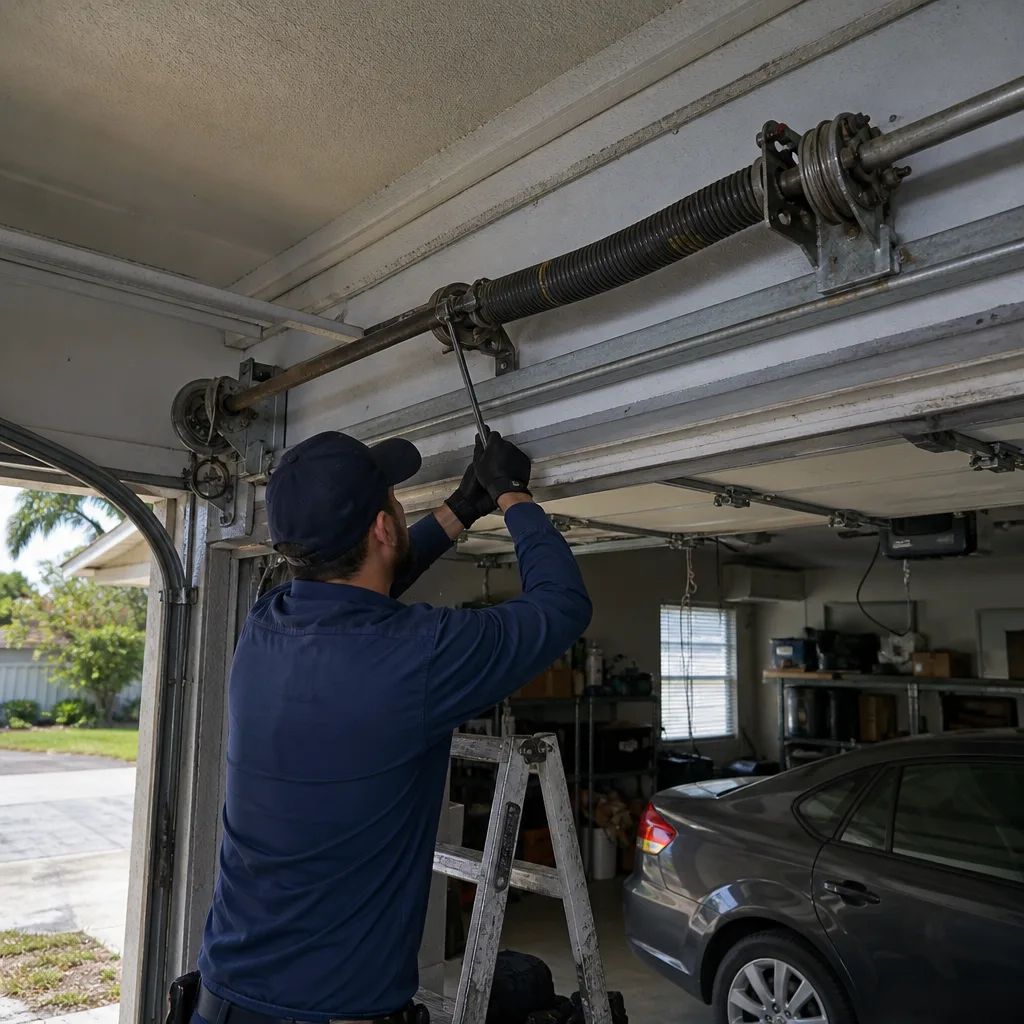 Before
 After
After Before
 After
After